Understanding Content Marketing Strategy
Before diving into specific examples, it’s essential to define what a content marketing strategy is. At its core, content marketing involves creating valuable, relevant content that attracts and engages a well-defined audience. Unlike traditional advertising, which pushes products or services, content marketing pulls people in by providing content that is genuinely useful.
Is content marketing critical for your brand’s success?
Absolutely. A well-crafted strategy does more than generate leads; it builds long-term relationships, boosts credibility, and enhances brand visibility. Unlike paid advertising—which stops working when you stop paying—content marketing continues to deliver value over time. Think of it as an investment in your brand’s future.
Growth-oriented companies invest heavily in content marketing. According to Forbes, more than one-third of businesses spend up to 30 percent of their marketing budget on content marketing. The investment pays off when executed strategically. Yet many marketing teams struggle to prove ROI for content marketing. As a result, they often fail to gain executive buy-in.
Dashboards may show growing traffic and social engagement, yet sales pipelines remain flat. This happens when content goals are disconnected from revenue objectives. To bridge the gap, it’s vital for marketing to redefine success in business terms: more qualified leads, faster customer acquisition, higher customer lifetime value, and stronger retention.
Key Elements of a Successful Content Marketing Strategy
A winning content marketing strategy doesn’t just happen—it’s built on several core elements:
- Understanding Your Audience: Knowing who you’re talking to is crucial. What are their challenges? What keeps them up at night? By understanding these factors, you can create content that speaks directly to their needs and aspirations.
- Setting Clear Goals: Whether you aim to increase brand awareness, generate leads, or build customer loyalty, having clear goals ensures that every piece of content serves a purpose.
- Content Creation: This is where you bring your strategy to life. From blog posts and videos to webinars and infographics, your content should be diverse and engaging. Videos are fantastic for storytelling, while whitepapers can establish authority on technical subjects.
- Strategic Distribution: Creating great content is only half the battle. You must ensure it reaches the right people. Leveraging the right platforms, from LinkedIn for B2B audiences to Instagram for visual content, is crucial.
- Performance Analysis: No strategy is complete without understanding its impact. Track key performance indicators (KPIs) such as engagement, leads, and conversions to see what works and what doesn’t. Use these insights to refine your strategy continuously.
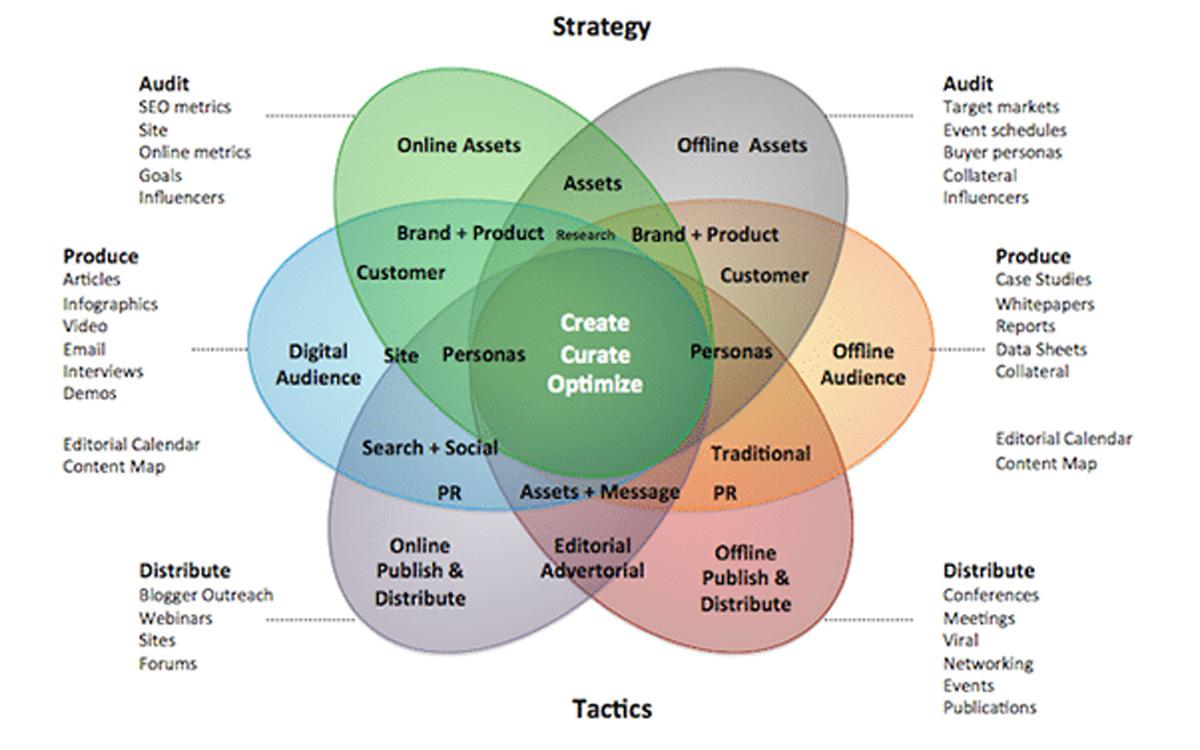
Results-Driven Tactics and Goals for Measurable Growth
Marketing teams do not need complex frameworks to drive success. They need clear, focused goals that align content with measurable business outcomes.
Increase Marketing-Sourced Revenue
If monthly marketing reports focus only on vanity metrics rather than financial outcomes, executives won’t see content as a revenue engine. Instead, set goals that link content directly to revenue. For example, beyond tracking blog traffic, measure how many leads, opportunities, or closed deals originated from specific content assets.
Example: A SaaS firm that publishes an industry benchmark report could track how many downloads convert into product demos. This metric demonstrates the revenue potential of well-targeted content, shows how the strategy influences growth, and validates marketing as a profit center.
Tools to consider:
- CRM and attribution platforms: vTiger CRM, HubSpot CRM, Salesforce, or Zoho
- Marketing automation tools: Marketo Engage, ActiveCampaign, Mailchimp, or HubSpot
- Analytics and reporting tools: Google Analytics 4 (GA4), Semrush, Looker Studio, or Tableau
Shorten the Sales Cycle
B2B sales cycles are notoriously long, complex, and involve multiple stakeholders. Each campaign should intentionally guide buyers through a pre-determined journey that addresses common objections and accelerates decision-making. Make it easy for them. When prospects encounter confusion or friction, they drop off.
Example: A manufacturing technology company can promote ROI calculators, case studies, and integration guides. These assets reduce uncertainty, build confidence, and speed up purchasing decisions. Adobe demonstrates this principle through its annual Adobe Summit, a conference dedicated to digital experiences, marketing, artificial intelligence (AI), and customer data. The event showcases real customer success stories and use cases, helping potential buyers visualize results and accelerate decision-making.
Improve Lead Quality and Sales Alignment
When marketing and sales work in silos, lead quality suffers. This misalignment wastes resources and lowers conversion rates. To avoid this gap, it’s vital for every piece of content to be designed to attract, educate, and qualify high-intent prospects. Schedule regular marketing-sales check-ins to review lead scoring, qualification criteria, and feedback loops to continuously refine targeting.
Example: A cybersecurity firm can create gated white papers that address critical challenges faced by ideal buyers. These leads are more likely to convert because they are aligned with the target persona, resulting in higher close rates and stronger ROI.
Reduce Customer Churn
Customer acquisition drives growth, but retention drives profitability. Research by Forester indicates that existing customers represent more than 60 percent of revenue. Additional studies increasing customer retention by just 5% can boost profits by as much as 95%. Lower churn means more predictable recurring revenue and reduced dependence on new customer acquisition.
Example: A marketing automation company can launch a series of advanced user webinars or training sessions that help clients improve campaign ROI. Customers who see measurable results are more likely to renew, upgrade, and advocate for the brand.
Increase Customer Lifetime Value
Many companies overlook post-sale content that encourages upselling, cross-selling, or continued engagement. By focusing on customer lifetime value (CLV), businesses can significantly boost profitability and strengthen loyalty, without raising acquisition costs.
Max Freedman, a senior analyst and business operations expert, says, “Customer loyalty is the lifeblood of startups and small businesses.” Selling to existing customers is more cost-effective than acquiring new ones. Loyal customers are also more likely to make repeat purchases, try new offerings, and recommend the brand to others.
Example: An e-commerce brand can regularly send personalized recommendations, exclusive offers, or loyalty rewards to existing customers. This approach keeps customers engaged and drives sustained revenue growth.
Create a Predictable, Measurable Content Engine
Marketing teams often treat content as one-off campaigns rather than part of a consistent growth engine. This makes it hard to track what’s working or replicate success. To ensure long-term impact, build a repeatable processing for planning, producing, and measuring content.
Example: A software company can build a year-round content roadmap that aligns with the buyer journey. This strategy may include developing educational articles, case studies, and webinars that address evolving customer needs at every stage. Over time, this consistent strategy creates a steady pipeline of inbound opportunities and measurable, compounding growth.
The Best Way to Implement These Strategies, Tactics and reach Goals in Your Organization
To implement these content marketing goals effectively:
- Align Content with Business Objectives: Ensure every piece of content is connected to your broader business goals—whether that’s boosting brand visibility, generating leads, or enhancing customer engagement.
- Adopt a Multi-Platform Strategy: Your audience engages with content across multiple platforms. Use a strategic mix to reach them where they are most active.
- Experiment and Refine: Test different content types and channels to see what resonates most with your audience. The key is to be adaptable and continuously refine your approach.
- Go Beyond Basic Personalization: Move towards advanced customization, where content is dynamically tailored to meet real-time audience needs. This level of personalization enhances engagement and sets you apart from competitors.

 By
By 

















Comments