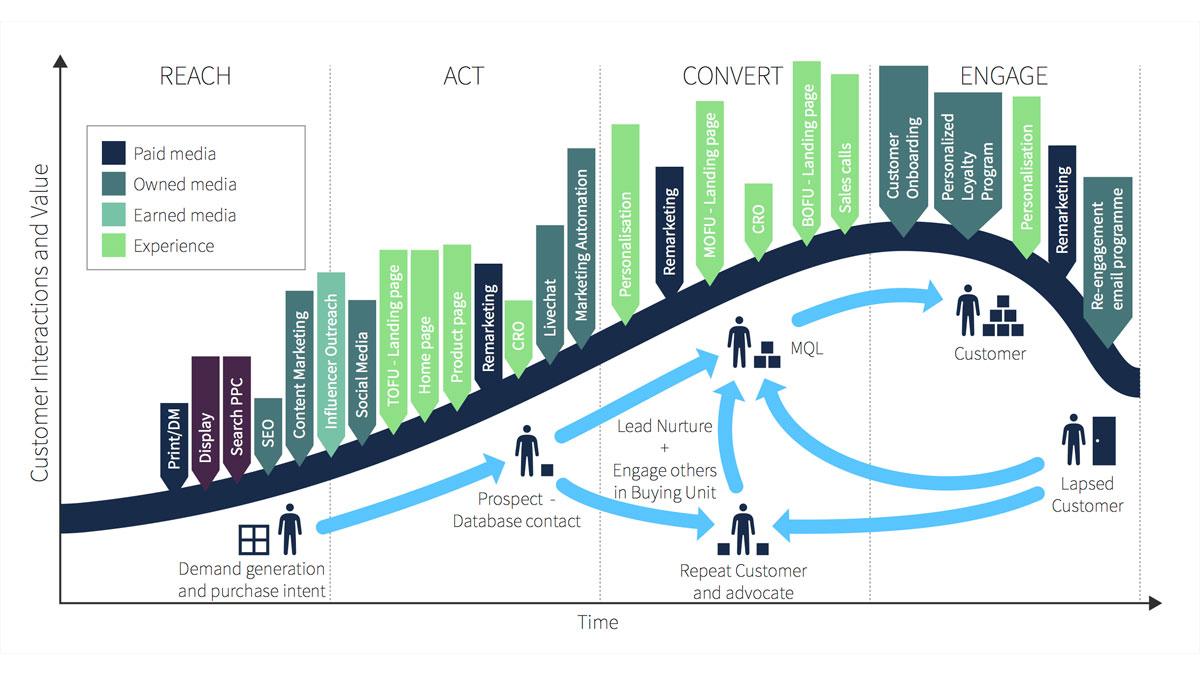
Today’s business customers use an average of 10 different interaction channels in their buying journey – double the number from just a few years ago. They might research a product on your website, see reviews on social media, attend a webinar, engage with sales outreach via email or LinkedIn, and expect the same brand experience throughout.
Omnichannel marketing has proven itself to be more than just a buzzword. As brands face increasingly diverse buying patterns and higher consumer expectations, siloed media plans are no longer viable. Advertisers are expected to show up across channels in ways that feel coordinated, intentional, and relevant, regardless of where or how consumers choose to engage. Simply put, there is no single-channel customer anymore. This shift creates immense pressure on companies to deliver a consistent, coordinated experience across every touchpoint.
Today, omnichannel adoption is no longer limited to early adopters. According to Salesforce, 73% of consumers expect brands to understand their needs across multiple interactions, even as those interactions span different platforms, devices, and moments in time. This expectation has fundamentally changed how advertisers approach digital media planning.
As more brands commit to omnichannel strategies, execution has become more complex. Channels continue to expand. Measurement standards continue to shift. Teams are asked to do more with less. And while omnichannel marketing is widely recognized as necessary, it is not always easy to implement effectively.
Here are omnichannel marketing challenges advertisers face today, along with solutions and tips on how best to approach them.
But First of all, What Is Omnichannel Marketing?
Omnichannel marketing is an approach to marketing that addresses the customer experience across each channel and how consumers transition between them as they move toward conversion. This includes desktop and mobile browsing, streaming and connected TV, retail platforms, social media, audio and podcasts, email, and any other environments a brand may use to reach its audience.
The goal of omnichannel marketing is not simply to maintain a presence across multiple channels. It is to create a unified, uninterrupted experience as consumers move between touchpoints, often multiple times, before making a purchase decision.
What Are Some Omnichannel Marketing Challenges?
1. Channel Consolidation
Consumers generally experience multiple touchpoints before making a purchase with a brand. According to Google, today’s consumers engage with brands across six or more digital touchpoints on the path to conversion, frequently switching devices and platforms within the same journey.
These touchpoints can range from streaming and connected TV to social media, search, retail platforms, audio, and email. The purpose of an omnichannel marketing strategy is to create a unified, seamless experience across all of these channels. Understandably, this can feel overwhelming and difficult for advertisers to execute consistently.
The solution:
There are a variety of data-driven approaches advertisers can use to understand better how consumers move across channels and how those interactions connect.
a. Identity and first-party data strategies
While deterministic cross-device tracking has become more limited, advertisers can still create meaningful connections using first-party data, authenticated signals, and modeled insights. Customer IDs, CRM data, and consented identifiers allow brands to better understand behavior across owned and paid environments.
These approaches help advertisers improve:
Message consistency across channels
Frequency management
Retargeting and suppression strategies
Rather than relying on perfect identity resolution, the focus shifts to probabilistic insights and aggregated patterns that support smarter planning.
b. Measurement and analytics frameworks
Modern measurement solutions focus on pulling data from multiple platforms into a centralized reporting environment. According to Forrester, data fragmentation remains one of the biggest barriers to effective cross-channel measurement.
By consolidating performance data into unified dashboards, advertisers can:
Analyze performance holistically rather than channel by channel
Identify trends and inefficiencies earlier
Optimize campaigns toward shared KPIs
This reduces reliance on isolated platform reporting and supports more confident decision-making.
c. CRM and marketing automation platforms
CRM and marketing automation platforms continue to play a critical role in omnichannel strategies. Tools like Salesforce, HubSpot, and Marketo allow advertisers to understand how leads enter the funnel, which touchpoints influence engagement, and where prospects are in the buying journey.
When CRM insights are integrated into media planning and activation, advertisers can deliver more timely, relevant messaging and identify new audiences that mirror existing customers.
2. Lacking a Data-Driven Mindset
Some organizations continue to face challenges adapting to omnichannel marketing because they are not fully data-driven. While access to data has expanded significantly, confidence in using it effectively has not always kept pace.
According to Deloitte, fewer than half of marketing leaders report high confidence in their ability to use data to guide strategic decisions, despite collecting more data than ever before.
The solution:
A data-driven mindset must start at the top of the organization. Without leadership support, it becomes difficult to align teams around shared metrics, priorities, and goals.
Once leadership buy-in is established, advertisers should ensure that processes, workflows, and reporting structures all support data-centric decision-making.
Actionable steps include:
Understanding what data is available and why it matters
Using data to identify both opportunities and inefficiencies
Encouraging teams to question assumptions and explore insights
Organizations that lack internal analytics resources may benefit from external support to help translate complex datasets into actionable recommendations.
3. Data Management (and Integration)
The average marketer now manages data from a wide range of platforms, partners, and technologies. Every click, view, and interaction generates new signals. When it comes time to activate or analyze that data, mismatched formats and inconsistent methodologies can create challenges or lead to data loss. As privacy regulations and platform limitations continue to evolve, data management has become less about volume and more about organization, consistency, and compliance.
The solution:
Although it may require upfront effort, establishing a unified data management workflow helps advertisers stay organized and efficient over time. Rather than waiting until campaign activation to reconcile data, advertisers benefit from defining workflows early in the process.
This includes:
Identifying potential data use cases in advance
Standardizing reporting methodologies where possible
Establishing clear ownership for data access and analysis
A thoughtful data management approach reduces friction, improves confidence in insights, and supports faster optimization across channels.
4. Silos Between the Sales and Marketing Team
Internal silos remain a common challenge for many organizations. While sales and marketing teams bring different strengths to the table, consumers increasingly expect a consistent experience regardless of how they enter the funnel. When messaging and goals are not aligned, the result is often fragmented communication and missed opportunities. According to HubSpot, companies with strong sales and marketing alignment are significantly more likely to achieve revenue growth.
The solution:
Addressing silos requires clear communication and shared objectives across teams. There is no single strategy that works for every organization, but consistency and repetition are essential.
Effective approaches include:
Establishing shared KPIs and success metrics
Holding regular cross-functional meetings
Identifying liaisons to support collaboration
Encouraging feedback across departments
When teams understand how their roles fit into the broader omnichannel strategy, coordination improves, and the customer experience benefits.
5. Lack of Resources
As brands continue to invest in omnichannel strategies, resource constraints often become more visible. Training, technology, and talent all require ongoing investment, particularly as platforms and regulations continue to evolve. According to Gartner, only 24% of CMOs say they have sufficient budget to fully execute their marketing strategy, making prioritization more important than ever.
The solution:
Advertisers can address resource limitations by focusing on high-impact initiatives and working with experienced partners like Digilant to help manage, execute, and optimize omnichannel campaigns. An external partner can act as an extension of the in-house team, providing operational support, expertise, and flexibility without adding unnecessary complexity.
Ready to Take On Omnichannel Marketing Challenges?
As you continue to invest in omnichannel marketing, challenges around coordination, data management, team alignment, and execution are likely to surface. Omnichannel excellence is quickly becoming the price of admission in B2B markets – buyers expect a coherent, personalized journey no matter how or where they engage with your company. As we’ve explored, the challenges of omnichannel marketing are real: data fragmentation, coordination headaches, content consistency, and especially the perennial divide between sales and marketing.
But as we’ve also seen, these challenges can be overcome – and the rewards for doing so are tremendous. Higher growth, happier customers, smoother internal operations, and a leg up on less-coordinated competitors.
The common thread through all of this is alignment. Bridging the sales and marketing gap is the linchpin of omnichannel marketing success. When we align our teams, our goals, our tools, and our messaging, we effectively build a bridge for the customer – guiding them seamlessly from first inquiry to closed deal and beyond. In 2026’s complex B2B landscape, that bridge is what turns complexity into conversion.
Establishing the right workflows early and having a clear strategy in place can make a meaningful difference in long-term performance.

 By
By 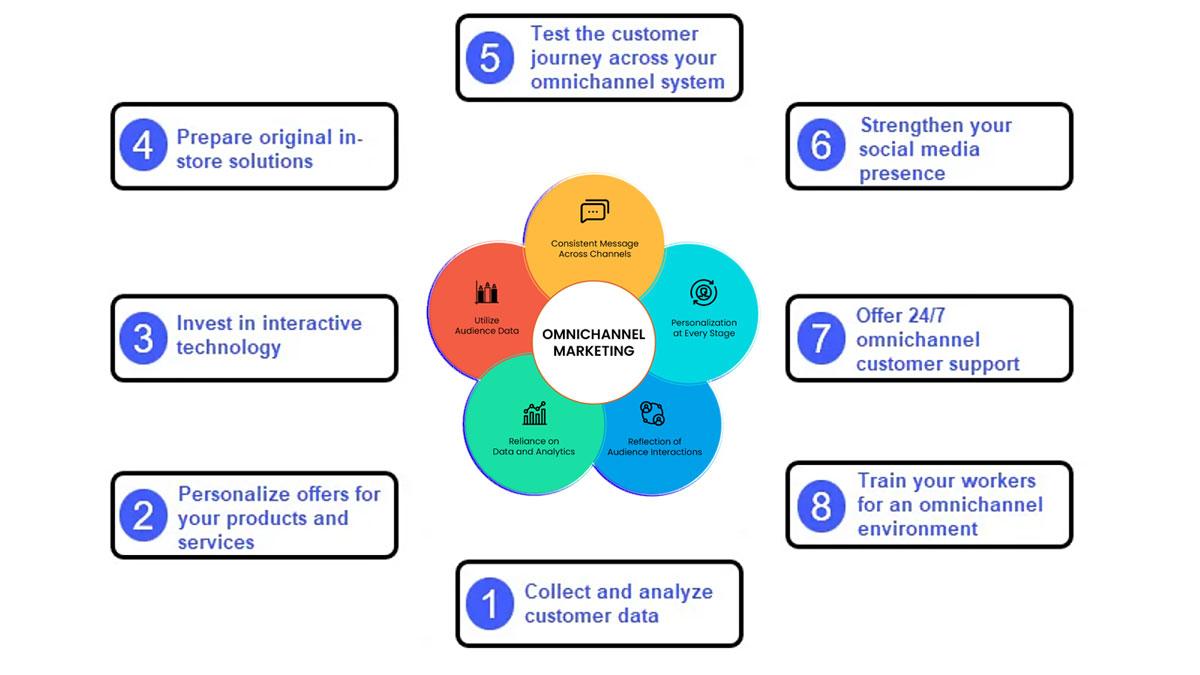


















Comments