When people talk about measuring social media success, they’re referring to engagement metrics, the umbrella term for the actions your audience takes to interact with your content. They measure it using shares, likes, comments, link clicks, mentions, retweets, shares and saves — also known as vanity metrics. However, real business growth is driven by deeper, more meaningful key performance indicators (KPIs) that accurately reflect brand performance and conversions. Those are the social media KPI metrics you want to measure if you’re aiming for lead generation and conversions.
Let’s review the actionable social media KPIs that matter in social media marketing and demonstrate how to measure success beyond surface-level metrics. And also, the different tools you can use for measuring success of social media campaigns.
Why Vanity Metrics Aren’t Enough
Vanity metrics may not be enough when it comes to social media marketing. However, they serve an essential purpose in your strategy.
“Vanity metrics don’t tell the full story, but they aren’t entirely useless, either. Here’s how I see it. Vanity metrics like likes, shares and comments do have a role, particularly in brand awareness and audience sentiment. While they won’t directly tell you about conversions, they do indicate:
- Content Resonance: Are people engaging with your content at all? If not, that’s a red flag.
- Amplification: Shares and retweets can increase organic reach, getting your brand in front of new audiences.
- Social Proof: High engagement makes your brand look credible and attractive to new potential followers/customers.
- Algorithmic Impact: On platforms like Instagram, X (formerly Twitter), TikTok and Facebook, engagement metrics signal to the algorithm that your content is valuable, leading to more exposure.
So, while they’re not the be-all and end-all, they’re useful for tracking early-stage success and visibility,” Nada Khafaga marketing specialist said.
Vanity metrics, such as likes, shares and follower counts, are often the first indicators of social media success. While these metrics increase your brand’s visibility, they don’t always translate to tangible results that drive business growth. That’s why they’re called “vanity” metrics. The term “vanity metrics” is used because they make things look good on the surface. However, just as looking good in the mirror doesn’t necessarily mean you’re healthy, they can look impressive but might not show the true health of your business.
High engagement doesn’t necessarily translate to increased sales, website traffic, or customer loyalty. In fact, focusing too much on vanity metrics can lead to misguided strategies that don’t align with your current business objectives, which is why you should shift the focus to social media success metrics.
Use Case Example
A good example is this organic gardening and pest control supplier. The brand received hundreds of views on various posts on social media but saw no significant uptick in product sales. After a careful and thorough review and audit, marketing analysts found that 10% of the traffic was generated through paid social media efforts, but only accounted for 2% of the company’s revenue. The discrepancy was in their conversion tracking and audience targeting. With these KPIs in mind, the strategy was shifted to targeting high-value audiences and a deep dive into data attribution.
Here are the results of that shift in strategy from vanity metrics to core KPIs:
- Increase in Paid Traffic: 188%
- Conversions: +279%
- Ad Reach: +1.097M
- ROAS: 10.41X
From this example, we can see that the disconnect often happens when social media strategies prioritize engagement over conversions. Instead, brands need to focus on indicators that reflect actual profitability, and that is where you will see growth for your business.
3 Essential KPIs for Social Media Marketing
These are recommended certain KPIs to track for measuring the success of social media efforts. She breaks down the essential metrics into four categories: brand awareness, engagement, conversion and customer loyalty.
1. Brand Awareness KPIs
These are the most commonly observed social media success metrics. They help measure how well your brand is recognized by your target audience and are crucial for expanding your reach and establishing a strong brand presence.
- Reach: “Reach tells you how many unique users saw your content,” Khafaga said. “It indicates how far your message is spreading across your audiences.”
- Impressions: The total number of times your content is displayed, even if not clicked. High impressions suggest strong visibility and tell you how often your content was viewed by your target audience.
- Share of Voice (SOV): “This tells you often your brand is mentioned in your industry vs. competitors,” Khafaga said. Use this metric to compare your brand’s presence to competitors and for benchmarking brand awareness within your industry.
- Branded Search Volume: “Are there more people Googling your brand? That’s a sign of growing awareness,” Khafaga said.
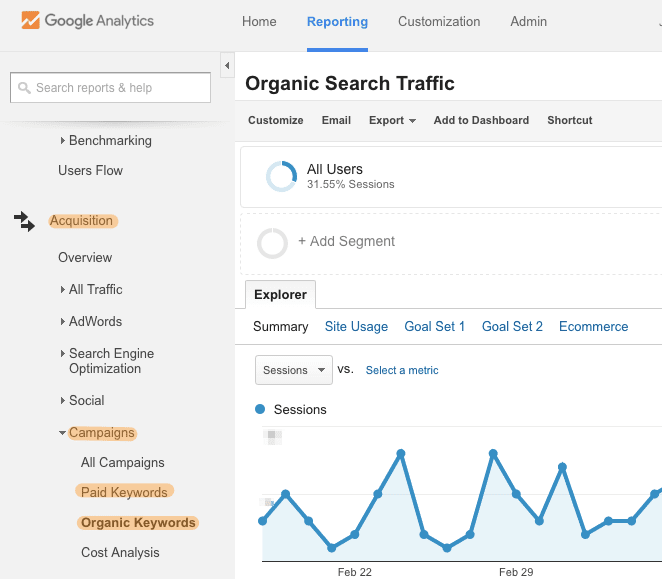
Measuring Branded Search Volume in Google Analytics
2. Engagement KPIs
Engagement indicators go deeper than what you get from likes. Engagement tells you how well your audience interacts with your content.
- Engagement Rate: This metric represents the percentage of people interacting with your content relative to the total audience reached. It includes likes, comments, shares and clicks.
- Click-Through Rate (CTR): CTR measures interest. If your audience isn’t clicking, they’re not interested in your content.
- Amplification Rate: Measures how often your audience shares your content, extending your reach.
- Comments and Mentions: This metric provides qualitative data about your brand’s perception. They can highlight what resonates with your audience and where improvements are needed. The more organic conversations around your brand, the better.
- Engagement Per Post: It measures the average engagement generated by each piece of content.
- Applause Rate: This metric tracks the number of approval actions (e.g., likes, favorites) a post receives relative to your followers.
- Video Completion Rate: This metric is key for video content, and it tells you how many viewers watched the entire video. If people aren’t watching, something’s off.
- Response Rate: Indicates how quickly and effectively a brand engages with comments and messages.
- Saves (Instagram, TikTok, Pinterest, LinkedIn): This is a huge indicator of intent. People save what they find valuable.
3. Conversion KPIs for Social Media Marketing
These are the social media KPI metrics that bridge the gap between social media engagement and actual business results. They track how social media efforts contribute to revenue and growth.
- Conversion Rate: This indicator answers this important question: Of the people landing on your site, how many actually buy/sign up?
- Cost Per Acquisition (CPA): This metric tells you how much you are spending to acquire a customer.
- Sales Revenue from Social Media: Directly links social media campaigns to sales, providing a clear return on investment (ROI) for your efforts.
- Customer Lifetime Value (CLV): This reflects the long-term revenue impact of a single customer.
- Return on Ad Spend (ROAS): If you’re running paid campaigns, this is a must-watch.
- Organic Traffic From Social (Google Analytics): If your social efforts aren’t driving organic search traffic, there’s a disconnect.
4 Tools and Strategies for Measuring KPIs
To track KPIs effectively, brands need effective tools and smart strategies. Here’s an in-depth look at each tool and strategy, including the KPIs they track and how to utilize them effectively.
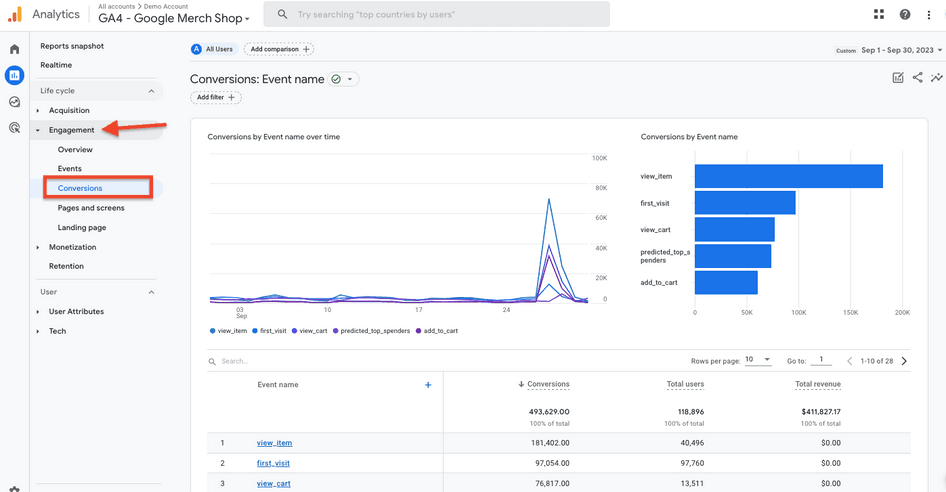
Tracking Conversions in GA4
1. Google Analytics: Tracking Conversions and Website Traffic
Google Analytics is a powerful tool for monitoring how social media traffic interacts with your website. By setting up UTM parameters and tracking referral sources, you can measure KPIs such as conversion rates, bounce rates and time on site.
For example, if you’re running a social media campaign, Google Analytics can show you which platform drives the most sales or sign-ups, helping you allocate resources efficiently.
2. Social Listening Tools: Monitoring Brand Sentiment and Engagement
Platforms like Brandwatch and Sprout Social allow businesses to track brand mentions and analyze sentiment across social media. These tools are excellent for measuring KPIs like brand sentiment, share of voice and engagement volume. By analyzing social conversations, you can gauge how your brand is perceived and respond proactively to trends or issues.
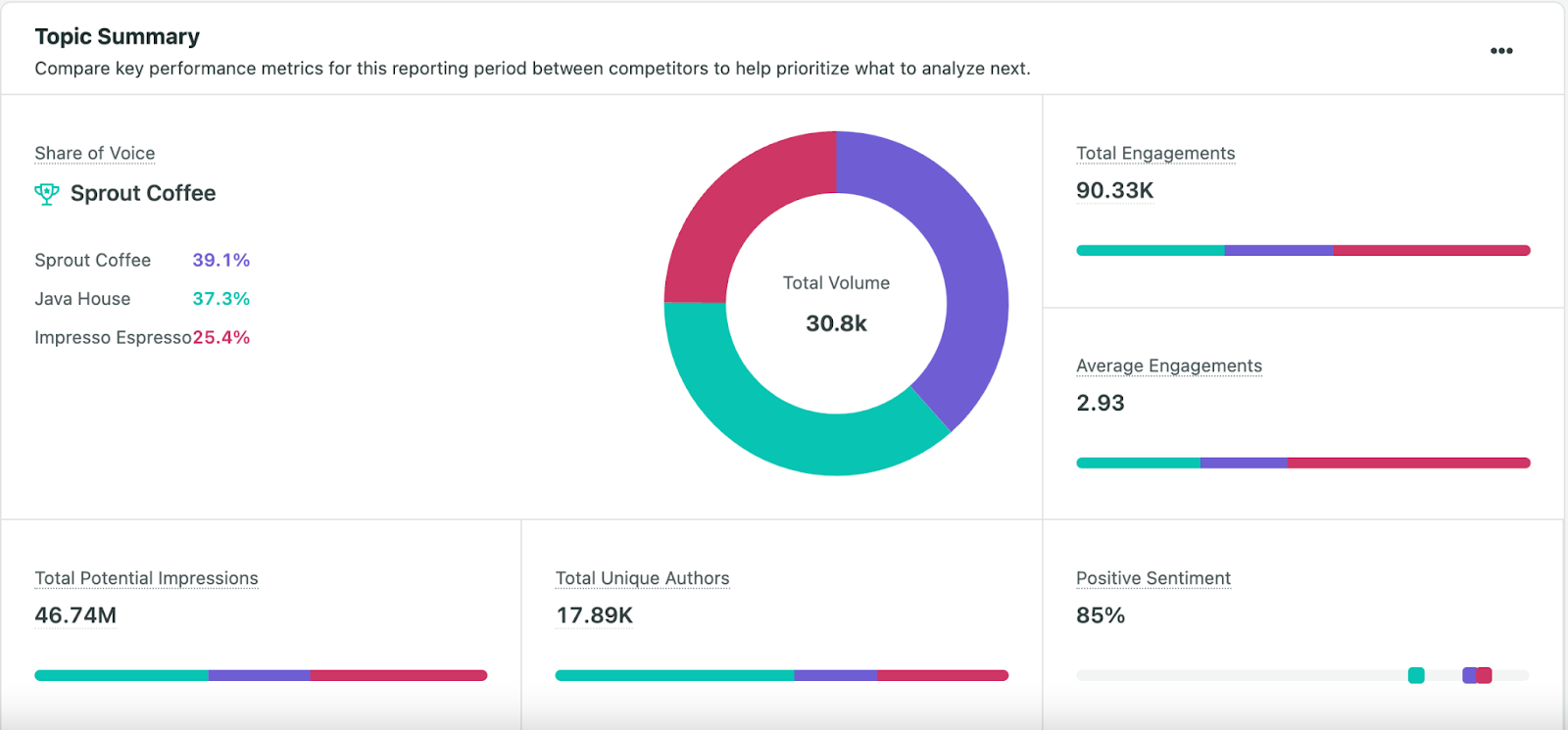
Sprout Social’s Listening Metrics
3. Custom Dashboards: Visualizing KPIs With Third-Party Tools
Custom dashboards created with tools like Hootsuite, Buffer or Sprout Social offer a consolidated view of your social media performance. These dashboards enable you to track KPIs such as overall engagement, social media ROI and campaign performance.
By integrating multiple platforms into one dashboard, you simplify data analysis and gain a holistic view of your social media strategy’s effectiveness.
4. Setting SMART Goals: Aligning KPIs With Business Objectives
A strategic approach to social media marketing begins with setting SMART goals eg.
Specific, Measurable, Achievable, Relevant and Time-Bound.
This method ensures that KPIs are not only tracked but also aligned with broader business goals. For example, if your objective is to increase sales by 20% within six months, you can track KPIs like conversion rates, lead generation and sales attributed to social media to measure progress accurately.

Source: Fossil Consulting
How to Turn Data Into Actionable Insights
If your goal is brand growth, you need to focus on essential drivers measuring social media success, which includes the following:
- Prioritize content that drives conversations and shares.
- Track engagement depth (saves, direct messages, meaningful comments, not just likes).
- Align social media with website traffic and conversions — social should be a traffic driver, not just a feel-good engagement hub.
“If you’re running paid campaigns, yes, CPM, or cost for 1,000 impressions, is useful for understanding cost efficiency in paid campaigns. However, organic traffic and conversions are the goal, focusing more on CTR, conversion rates and organic search uplift,” Marketing specialist said.
Here’s a short checklist of action items to put all of these KPIs in action:
- Regular Reporting and Analysis: Establish a consistent schedule to review social media social media success metrics and adjust strategies as needed.
- A/B Testing: Experiment with different content types and formats to find what resonates best with your audience.
- Adjusting Strategy: Make informed decisions to enhance your social media efforts based on data insights.
- Case Study: Share a success story of how data-driven strategies led to measurable business results.
- Recalibrating KPIs: Regularly update your KPIs to stay aligned with evolving business goals and market trends.
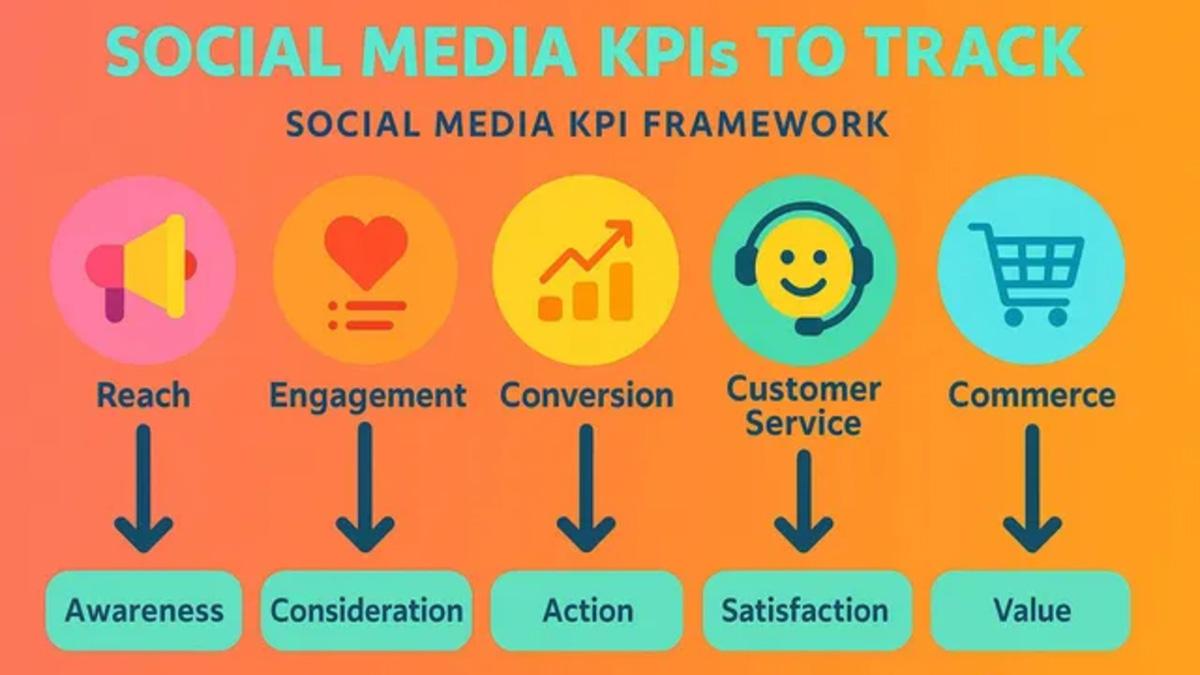
Common mistakes to avoid when tracking social media KPIs
Here are three mistakes we often see marketers make while tracking KPIs.
- Over-indexing on short-term wins: It’s easy to pick KPIs that deliver quick wins, especially in a new role or during a launch. But short-term spikes can distract from real impact. A post might get huge reach, yet barely any engagement. That number looks great on paper, but it doesn’t mean much. Always dig deeper and choose KPIs that support long-term success, not just instant results.
- Not adding context to each KPI: Add a quick line on trend, comparison, or impact so every KPI tells a clear story. Saying “engagement rate is 3.2%” means nothing unless you explain whether it’s up, down, or better than competitors. Readers shouldn’t have to guess what the number implies.
- Not complementing with qualitative KPIs: Relying only on numbers gives you half the picture. Without qualitative signals (comments, DMs, sentiment, user feedback) you miss the story behind the data. A spike in engagement might look great, but the comments could be overwhelmingly negative. Pair the numbers with human insight to understand the full reality.

 By
By 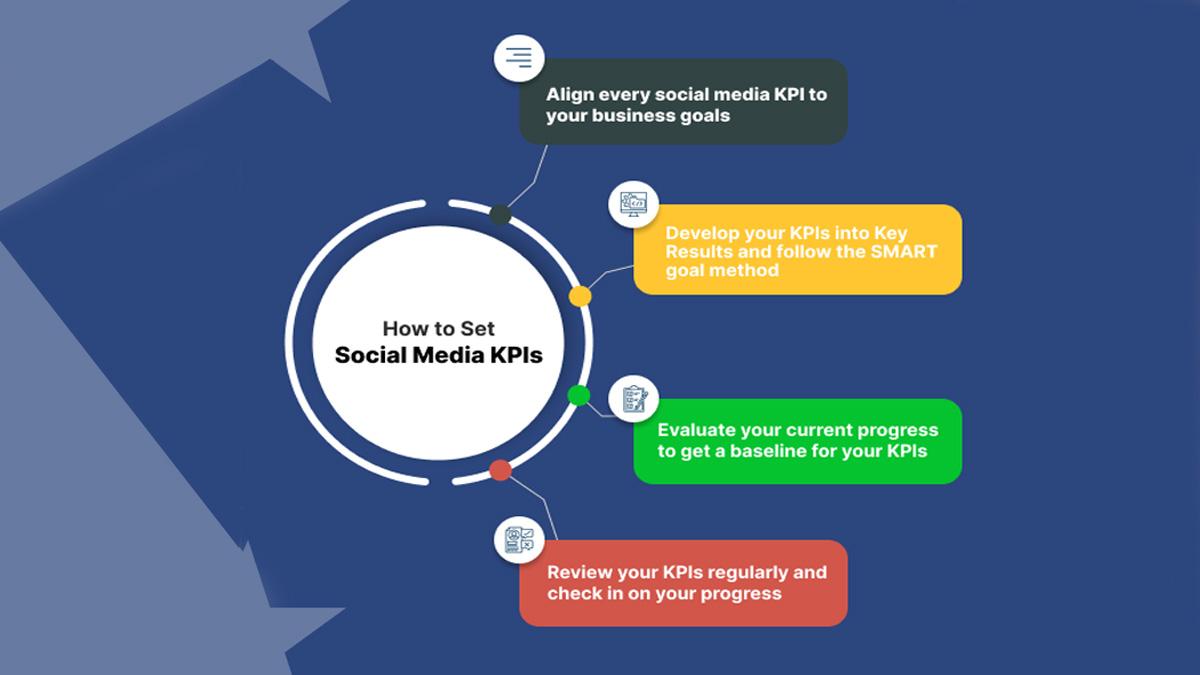
















Comments