
 By
By The Elevator Pitch… What, Why and How?
Your elevator pitch is your first impression – a brief, persuasive speech designed to spark interest in what your business does. However, if your pitch isn’t landing as expected, it might be time to reassess and refine your approach.
A versatile pitch tailored to prospective buyers, highlighting your product or service. It’s direct and aimed at opening a dialogue about how you can solve a specific problem for them. Here’s why your elevator pitch might not be working and how you can turn it around.
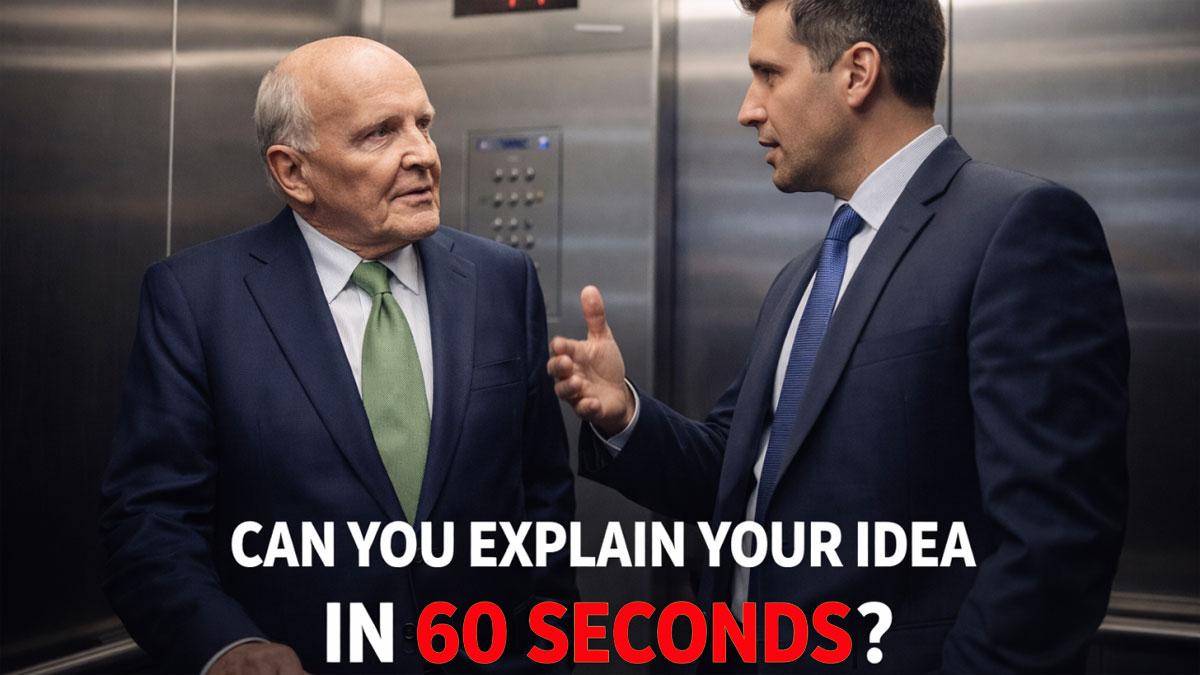
Organizations have countless opportunities to explain who they are and what they do. It happens during sales calls, networking events, on trade show floors, and in casual conversations. The setting changes. The challenge doesn’t.
Someone asks a seemingly simple question:
“So, what does your company do?”
Five minutes later, the representative recited products and services, differentiators, target markets, capabilities, growth strategy, and the company’s mission statement. Everything they’ve said is accurate, but what will people remember tomorrow…?
What Is an Elevator Pitch?
An elevator pitch isn’t about fitting everything an organization does into 30 seconds. It’s about identifying the one or two things you want people to take away after the conversation ends. If the message isn’t clear, memorable, and meaningful in 30 seconds, it probably isn’t clear, memorable, and meaningful elsewhere.
- An elevator pitch is a persuasive, concise introduction that provides the listener with a solid idea of a person, a business, a product, or a service (or practically anything else) within just a short space of time.
- Typically, an elevator pitch will last no more than 2 minutes, although it is usually much shorter (20 or 30 seconds) – about the length of the average elevator ride. Elevator pitches are common when highlighting your individual skills when interviewing for a job, but they are also often used in marketing.
Clarity Is More Memorable Than Complexity
Organizations don’t struggle with messaging because they lack expertise. More often, they struggle because they have so much of it. Years of growth, expanding capabilities, acquisitions, and evolving service offerings can make it difficult to know what’s most important to communicate first. The natural instinct is to explain everything.
Many organizations mistake completeness for clarity. The assumption is understandable. The more complex the work is, the greater the temptation to explain every capability, differentiator, and service offering.
But effective messaging requires difficult choices. Organizations need to decide what to communicate first, what can wait until later, and what doesn’t need to be said at all. Ironically, companies rarely struggle because they don’t know what to say. More often, they struggle because they don’t know what to leave out.
The goal isn’t to say less. It’s to make sure the most important things aren’t lost among everything else.
Consider the following examples:
- We’re a leading provider of innovative, end-to-end digital transformation solutions that empower organizations to maximize operational efficiency.
- We deliver integrated, next-generation business solutions across multiple vertical markets.
These descriptions may be technically accurate, but they leave the listener with an important question: What does the organization actually do?
Now consider these alternatives:
- We help manufacturers reduce costly downtime by modernizing aging infrastructure without disrupting production.
- We help healthcare organizations design safer, more efficient environments that improve patient experiences.
- We help businesses develop stronger leaders and build healthier workplace cultures.
The difference is clarity. Simple messaging isn’t simplistic. It’s meaningful because it immediately communicates who an organization serves, what problems it solves, and why its work matters.
The Goal Isn’t to Explain Everything
Organizations often communicate from their own perspective rather than their audiences’ perspective. Marketing materials describe capabilities. Sales presentations highlight differentiators. Elevator pitches list products and services. Meanwhile, prospective customers are asking a much simpler question: Can this organization solve my problem?
Prospects don’t need to understand everything about a company immediately. They simply need to understand enough to appreciate the value being offered and decide whether the conversation should continue.
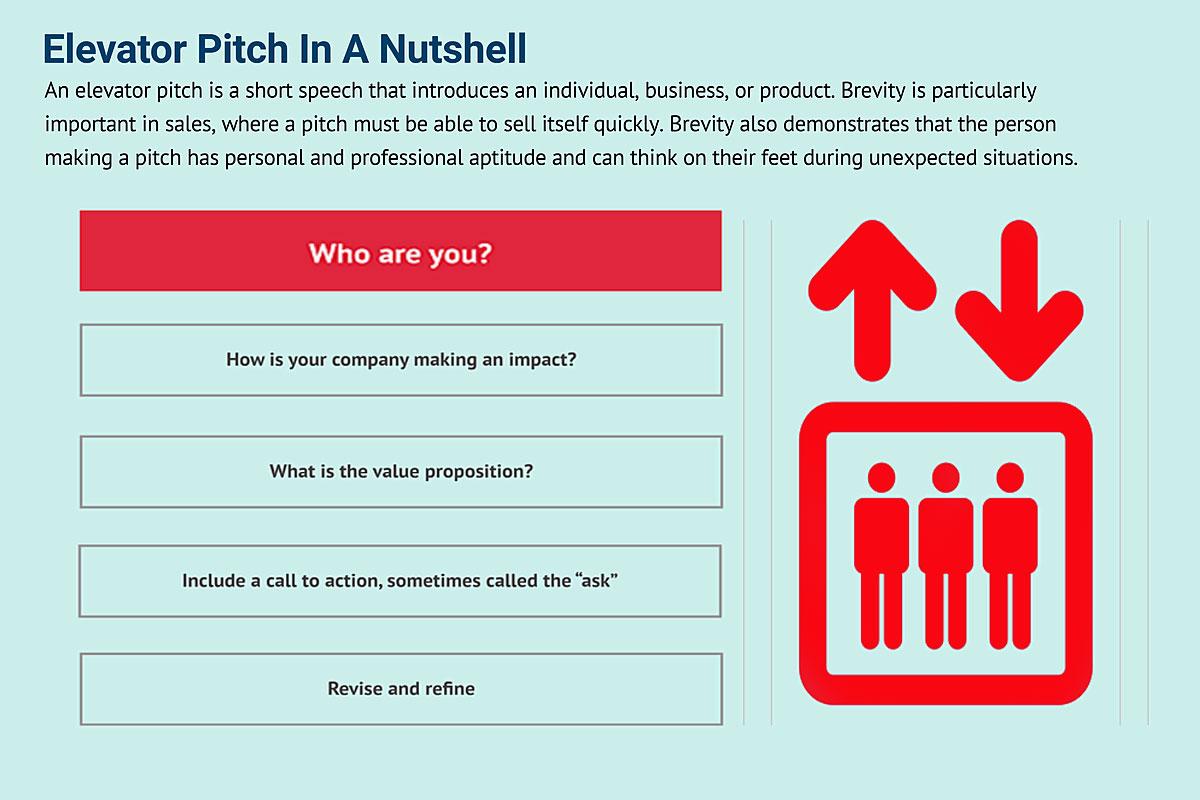
The 24-Hour Test
Perhaps organizations have been asking the wrong question all along. The question isn’t, “Can we explain what we do in 30 seconds?” Rather, it should be, “What will people remember 24 hours later?”
Imagine meeting someone at an industry conference. The following day, they’re speaking with a colleague about that conversation. What would they say? Would they remember the problem the organization solves? The audience it serves? The value it provides? Or would they remember only that the company sounded impressive but complicated?
Great messaging survives beyond the conversation itself.
An elevator pitch is the ultimate stress test for organizational messaging. If an organization’s value can’t be communicated clearly in 30 seconds, it becomes increasingly difficult to communicate it through websites, sales collateral, presentations, thought leadership, or media interviews.
Elevator Pitch Examples
Here are two statements that may be created by a technology company:
Example A:
“I’m Jeff, and I work for the 123 National Corporation. As leading innovators, we’re making it possible for businesses like you to improve the accuracy of their transactional record-keeping using Blockchain; one of the most disruptive technologies today. By using an in-house team, we’re able to maintain control over the costs, deployments, and compatibility with other systems, delivering the benefits to our clients.”
Example B:
“I work for the 123 National Corporation. We know that cyber security is currently a major issue and that businesses like you are struggling to keep your transactional data safe and secure. We’re offering a solution using the latest technology to keep your computer-stored data highly protected. We’re proud to be able to offer this solution for a much lower cost than our competitors, making us the perfect choice.”
Which one makes the best elevator pitch?
If you chose Example A, then you’re right, here is why!
Example A has everything an elevator pitch needs. It immediately adds a sense of personality and with the inclusion of the speaker’s name before moving onto an introduction to the solution. It offers a brief yet informative overview of the technology used that not only discusses a number of different benefits of using that company but also shows how the company is able to guarantee these benefits. Finally, the pitch touches on compatibility, making it clear that it should be simple for the client to implement.
Example B lacks personality and spends more time discussing the problem than the solution. It mentions computer-stored data at a time when mobile devices are taking over, which suggests that the pitch hasn’t been updated in some time. The only benefit of choosing that company that is mentioned is cost, which could be damaging if cost isn’t a primary concern for the customer. Ultimately, the customer has relatively little useful information by the end of the pitch.
Another important thing to mention is that you don’t have to limit yourself with one unique pitch for every occasion. Different businesses have different values and priorities, so you can always look to personalize your pitch to your current audience.
More Than an Elevator Pitch
The strongest brands aren’t necessarily the loudest, most creative, or most technically sophisticated. They’re often the easiest to describe. And more, Describing an organization in a single sentence doesn’t mean oversimplifying what it does. Some of the world’s most recognizable organizations can be explained simply, despite being extraordinarily complex:
- Tesla makes electric vehicles.
- Airbnb helps people find and book places to stay around the world.
- Stripe helps businesses accept payments.
- LinkedIn helps professionals connect and find career opportunities.
The strongest messaging creates curiosity rather than confusion. None of these descriptions fully capture what the organizations do. The companies are far more complex than a single sentence suggests. Yet that’s precisely the point. One day after meeting someone from an organization, prospects won’t remember every product, service, differentiator, or capability they discussed with the sales rep. They will, however, remember what stood out.
***
Every organization should be able to answer one simple question: If a prospect remembers only one thing after a brief conversation, what should it be?
If answering that question proves difficult, the challenge probably isn’t finding better words. It’s deciding what deserves to be remembered. Organizations don’t need to communicate less. They need to communicate what matters first. Everything else can follow.
A well-crafted elevator pitch is a powerful tool for entrepreneurs and business owners. By knowing your audience, keeping your message concise, and clearly articulating the problem you solve and how you solve it, you can create a pitch that not only captures attention but also opens doors to deeper conversations. Remember, your elevator pitch is not just about getting noticed; it’s about creating an opening for meaningful engagement with potential clients, partners, and investors.
For More and Moving Ahead…
Talk to PHMC GPE Team !
Discover More:
At a Glance… The Soul of PHMC GPE LLC
Positioned to Influence… Appointed to Succeed !
***

Marketing & Technology
Bound and Secured

“The Right Message to the Right Customer at the Right Time through the Right Channel”
The XXIst Century Technologies offer a vast and huge panel of useful tools that can ease a Marketing process if correctly and securely used.
- Define your Marketing Strategy and Plan
- Select and Use the right Technology tools
- Refine your Tactics to Reach your Goal
***











Comments