
 By
By AI search platforms do not bypass traditional search engine optimization; they depend on it.
Strong technical foundations—including clean crawlability, readable plain text, precise schema markup, and fast rendering—act as the core infrastructure that allows LLMs and AI engines to discover, parse, and cite your content
When was the last time you looked up something on Google, and it didn’t trigger an AI Overview response? Chances are, a long time ago. Generated responses are taking up more and more space in search results, and this real estate has now changed how users find content and discover products and brands. Ultimately, AI-generated summaries can determine whether you get found by customers or not, and whether you get chosen or not.
That means staying visible in front of your target audience now depends a lot more heavily on whether AI search systems can properly read and interpret your website.
This is where technical SEO comes in. The underlying technical setup continues to decide who gets included in AI summaries and who gets skipped. The blog explains why those foundations still matter in the AI age and what supports AI search visibility as search continues to change.
Explore why technical SEO still matters and where your AI search optimization efforts need to focus to stay visible.
Why AI Search Still Depends on SEO
AI search may have changed how answers appear, but it hasn’t altered how content gets found in the first place. Before an AI platform can summarize a page or pull information into a response, that page still needs to be discovered and processed through a search engine’s index.
“AI answers are not built from a fresh read of the web. ChatGPT still leans on Bing’s index, Google’s AI features run on Google’s, so the old plumbing decides what the model even gets to consider,” said Jimi Gibson, Vice President of Brand Communication at Thrive.
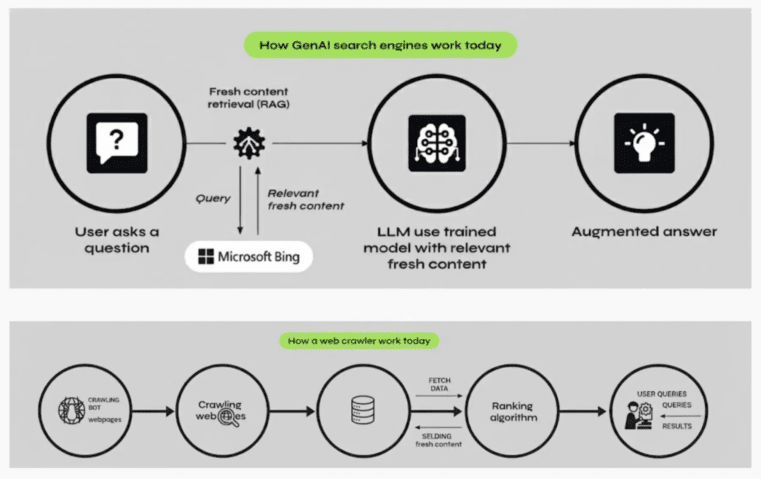
Image Source: Coozmoo
If your website does not give search platforms clear, usable information, your content is less likely to appear in generated answers.
How Technical SEO Supports AI Search Discovery
Technical SEO for AI search can be the key that determines whether search systems can access your content at all. Among the technical factors that influence discovery, crawler access and rendering directly affect whether a page can even be considered.
“Your robots.txt is more granular than most teams realize, and plenty of sites blocked the training bots in 2024 and quietly erased themselves from AI search in the process,” Gibson said. “Then check what your raw HTML actually contains, because outside of Google, these crawlers do not run JavaScript. They read what the server hands them and move on. You can rank number one and still be invisible.”
Website crawlability for AI search should be treated as a core visibility requirement. If important pages are blocked, incomplete or unreadable in the raw HTML, search systems may never process the content correctly. That can limit whether your information gets surfaced or cited.
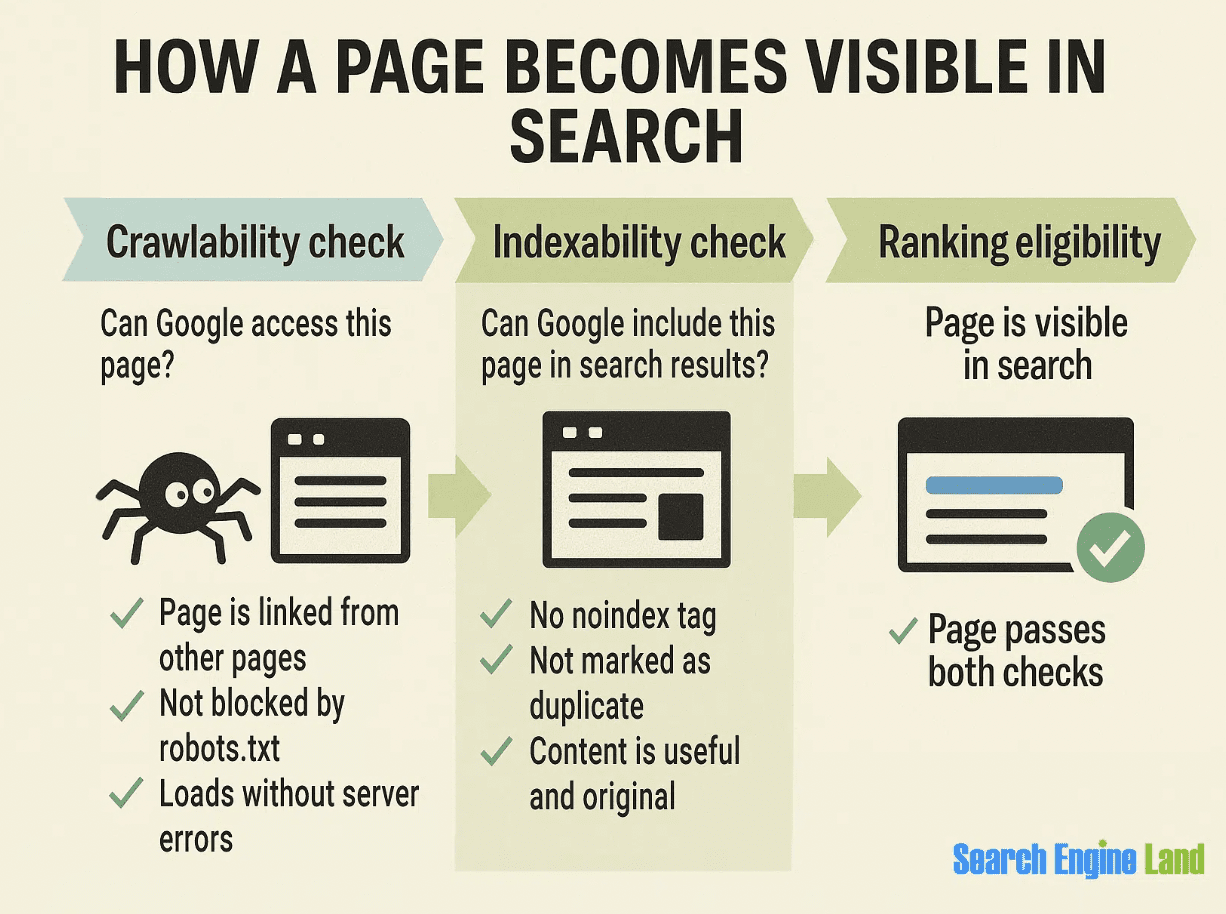
Image Source: Search Engine Land
What Search Signals Help AI Understand Your Website
Search systems need clear signals to understand what your website is about, what each page covers and how your brand should be interpreted across the web. According to Gibson, those signals often come from the following:
“Descriptive headings, schema markup and the same entity description everywhere you appear. Write so any single paragraph can be lifted off the page and still make sense standing alone, because that is the unit these systems actually retrieve,” Gibson said.
- Descriptive Headings
Descriptive headings improve AI search visibility by giving search systems clearer context about a page’s subject and the role of each section within it. They act as labels that define topic focus, which makes the content easier to interpret when systems scan or retrieve information. - Schema Markup
Schema markup adds another layer of meaning by identifying what the content represents. It can clarify whether a page is an article, a service page, a business profile or another content type. Structured data for AI search supports interpretation by making key details more explicit. - Entity Description Consistency
AI search optimization depends in part on entity consistency across the web. When your company is described in similar terms across its website and other web properties, search systems have a stronger basis for understanding who you are and what your brand is associated with. - Paragraph-Level Retrieval
Paragraph-level clarity is part of strong SEO foundations for AI. This is because AI systems often retrieve smaller passages instead of evaluating a full page as a single unit.
How AI search engines find content often depends on the signals that give your website meaning. When those signals are clear and consistent, your content becomes easier to retrieve.
***
***
How To Prepare Your Site for AI and Organic Search Results
Preparing a site for AI and organic visibility starts with the basics that affect access and clarity.
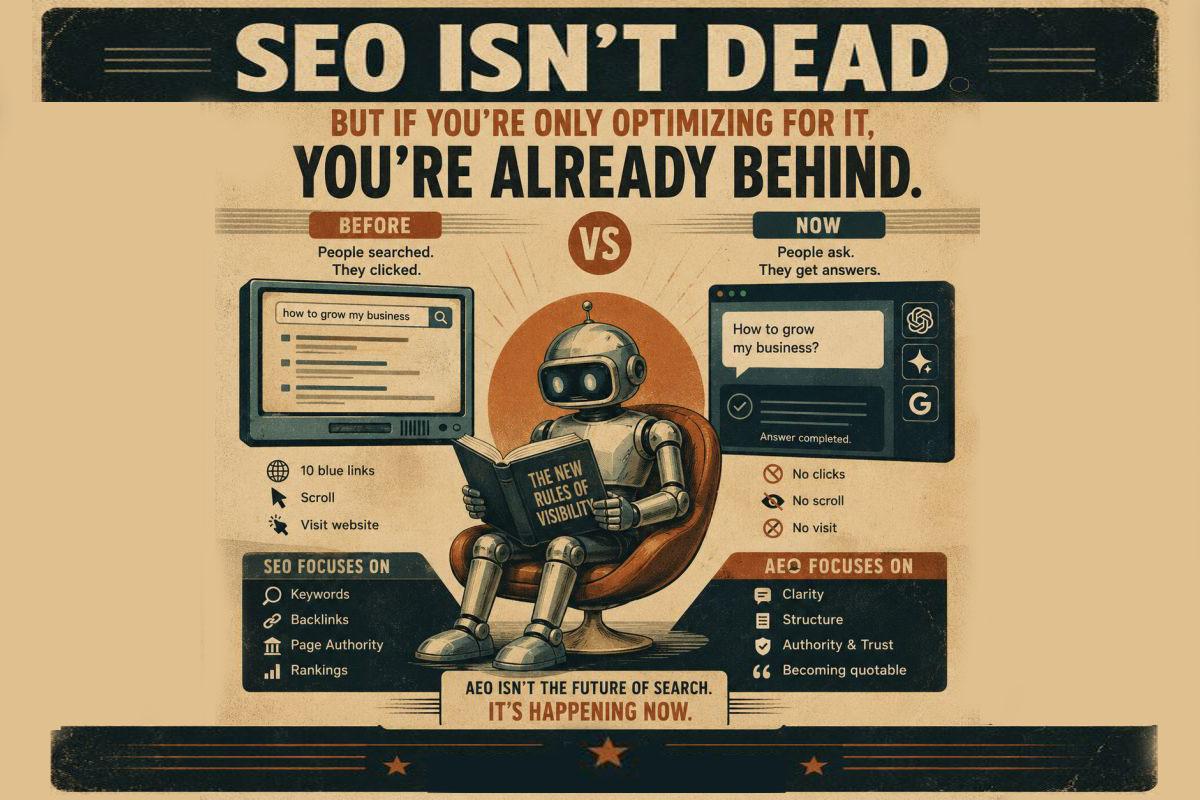
“Fix crawl and render first, then rewrite your core pages so every real buyer question has a direct, quotable answer sitting in plain text. Then go earn mentions off your own site, because most AI citations do not point at the brand being discussed,” Gibson said.
Here’s a clear breakdown of how teams optimize websites for AI search while supporting organic visibility.
1. Crawl and Render Come First
Search systems can’t use content they cannot access or read properly. Crawl and render issues make technical SEO for AI search a starting point for visibility in both AI and traditional search.
2. Core Pages Need Direct Answers
Core pages carry more value when they address real buyer questions in clear language. A strong AI SEO strategy includes pages with direct answers because search systems can use that material more easily when generating results that pull short passages rather than full-page summaries.
3. Plain Text Affects Extractability
Information that appears in plain text is easier for AI platforms to process and quote when they retrieve smaller sections of a page. Website crawlability for AI search also matters here because content cannot become a usable source if systems struggle to access or read it in the first place.
4. Off-Site Mentions Shape Broader Visibility
Search visibility does not depend only on what appears on your own website. Teams that optimize websites for AI search also need to account for references from other sites, since those mentions influence how a brand is understood and cited in third-party sources.
SEO foundations for AI still shape whether your website can be processed and referenced across modern search results. The underlying setup needs to be clear and reliable, so your content has a stronger chance of appearing in both AI-driven and organic search experiences.
Prepare Your Search Presence for What Comes Next
More search visibility now depends on whether your website can be processed correctly before it ever has a chance to earn a click. AI-driven results are reshaping discovery, and technical issues can limit whether your pages are found, understood and used in the first place.
Google Publishes Guide on Optimizing for Generative AI Features
For More and Moving Ahead…
Talk to PHMC GPE Team !
Discover More:
At a Glance… The Soul of PHMC GPE LLC
Positioned to Influence… Appointed to Succeed !
***

Marketing & Technology
Bound and Secured

“The Right Message to the Right Customer at the Right Time through the Right Channel”
The XXIst Century Technologies offer a vast and huge panel of useful tools that can ease a Marketing process if correctly and securely used.
- Define your Marketing Strategy and Plan
- Select and Use the right Technology tools
- Refine your Tactics to Reach your Goal
***














Comments