Your Next Customer Will Probably Find You Using AI. Now What?
For more than 20 years, B2B content strategy followed a strict playbook. Identify keywords, publish consistently, earn backlinks, and optimize pages to rank. The system wasn’t perfect, but it was predictable. That predictability has disappeared fast.
In the past year alone, AI-powered search tools have fundamentally changed how buyers discover, evaluate, and shortlist vendors. Decision-makers are increasingly asking AI to summarize options, explain differences, and surface recommendations, often before they ever visit a website. For growth teams, this shift shouldn’t be dismissed as a future concern. It’s already affecting visibility, influence, and pipeline. And it’s forcing a hard truth to the surface: content strategies built primarily to rank are no longer enough to be remembered.
Artificial intelligence (AI) tools have fundamentally changed how people find information online. Today’s buyers rarely browse through pages of search results. Instead, they turn to AI platforms to generate answers, recommendations, and strategies in real time. For marketers, this shift raises urgent questions. If prospects receive answers directly from AI, then…
What happens to organic traffic?
How will companies maintain visibility in the buying journey?
How can marketing teams adapt their content strategies to remain competitive?
What’s Actually Different About AI Search
AI search plays a dual role of information retrieval and synthesis. When buyers ask multi-step questions like Which platforms handle X best for mid-market teams?, AI tools pull from multiple sources, weigh context, and generate a single response.
This process has two important implications for B2B marketers:
You’re no longer competing for a click. You’re competing for inclusion.
Your content may be influencing buyers even if they never land on your site.
In this environment, authority isn’t defined by one high-ranking page. It’s shaped by how consistently and credibly your brand shows up across a topic. Mentions, clarity, depth, and perspective all matter more than keyword density ever did. What exactly is changing, and what can marketers focus on now? The following five critical shifts define the new search.
Five Critical Shifts Marketers Need to Understand
As Forbes reports, AI is no longer experimental: it is embedded in today’s marketing operations. Since ChatGPT’s release in 2022, marketers have moved from cautious exploration to full-scale integration across content, search, and customer engagement strategies.
1. Organic Traffic Is Declining, But Lead Quality Is Improving
AI-powered search is reducing clicks while simultaneously filtering out low-intent users. According to Semrush, visitors from AI-powered search convert at rates of up to four times higher than traditional organic traffic. Casual browsers are getting answers directly from AI without ever visiting a brand’s site. What remains is a smaller, more qualified audience of buyers who are more intentional, more problem-aware, and closer to making purchase decisions. This means that AI is quietly pre-qualifying leads for businesses.
What marketers can do:
Focus on buyer intent. Prioritize high-intent, decision-stage keywords that align with prospects who are ready to act.
Optimize content for AI readability. Focus on clear structure, concise insights, and skimmable, quotable sections that deliver value immediately.
Measure what drives revenue. Shift KPIs away from vanity metrics like traffic toward pipeline contribution, demos booked, and qualified leads generated.
2. Traditional SEO Strategies Are No Longer Enough
Traditional SEO still matters, but only when layered with AI-focused tactics. Eli Schwartz, author of Product-Led SEO, calls it an SEO reset. Outdated tactics like keyword stuffing, backlink chasing, and focusing purely on high-volume terms no longer guarantee visibility or conversions.
What marketers can do:
Prioritize intent-driven research. Focus keyword strategies on decision-stage and problem-aware queries, not just search volume.
Maintain SEO basics. Ensure title tags, meta descriptions, header structure, and alt text clearly communicate content relevance to search engines and AI platforms.
Strengthen content connections. Use internal linking to guide users and AI through related content, signaling topic authority.
Optimize technical performance: Improve page speed, mobile usability, and site security to support user experience and search visibility.
Keep content fresh. Regularly update key pages to signal relevance and authority.
Audit for performance. Evaluate current content, keep what converts, and refresh pages that attract traffic but underperform.
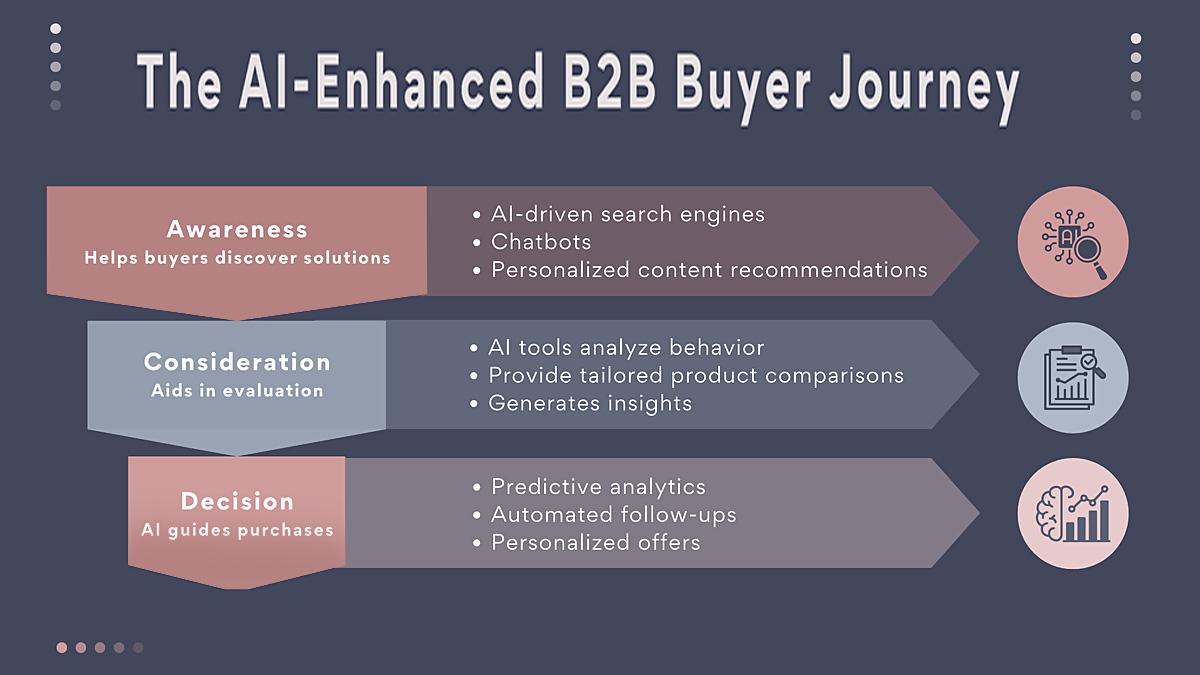
3. AI Is Becoming the First Step in the B2B Buying Journey
IDC research shows that more than 70% of decision-makers expect to rely more heavily on AI chatbots for research and evaluation. Buyers are now asking AI the same questions they used to ask sales reps, consultants, or industry experts. This means the buying journey begins before direct interaction with a brand.
What marketers can do:
Deliver decision-stage content. Publish comparison, evaluation, and “best fit” resources that guide buyers toward informed choices.
Answer real buyer questions. Address the same concerns prospects typically bring to sales teams or experts.
Show practical application. Highlight use cases, trade-offs, and decision criteria that reflect real-world scenarios.
Expand external visibility. Ensure your expertise appears in trusted industry publications, forums, and discussions.
4. Thought Leadership Is Becoming a Visibility Strategy
According to AIBoost, AI citation systems prioritize industry leaders, original insights, and credible sources. This means that those experts and brands that publish unique insights and expert-driven perspectives are more likely to be cited in AI-generated answers.
What marketers can do:
Activate thought leadership. Encourage subject matter experts to share insights, perspectives, and industry expertise publicly.
Invest in depth over volume. Focus on producing substantive, analytical content rather than surface-level blogs.
Address complex challenges. Create content that answers nuanced, high-value industry questions.
5. Attribution Models Are Changing
AI tools pull information from high-authority, third-party sources like Gartner, Statista, industry publications, and even Wikipedia. Brand-owned content is often not the first source AI relies on when generating answers. This makes traditional attribution metrics, such as traffic and first-touch conversion, less reliable indicators of marketing performance. Influence now often happens off-site through citations, comparisons, and community discussions on platforms like Reddit and Quora.
What marketers can do:
Track off-site visibility. Monitor brand presence across third-party platforms, not just owned channels.
Create citation-worthy content. Invest in authoritative content such as research, expert insights, and comparison content that others reference.
Measure influence over clicks. Evaluate how content shapes buyer understanding and perception, beyond traffic metrics.
Adapting to the AI-Driven Customer Journey
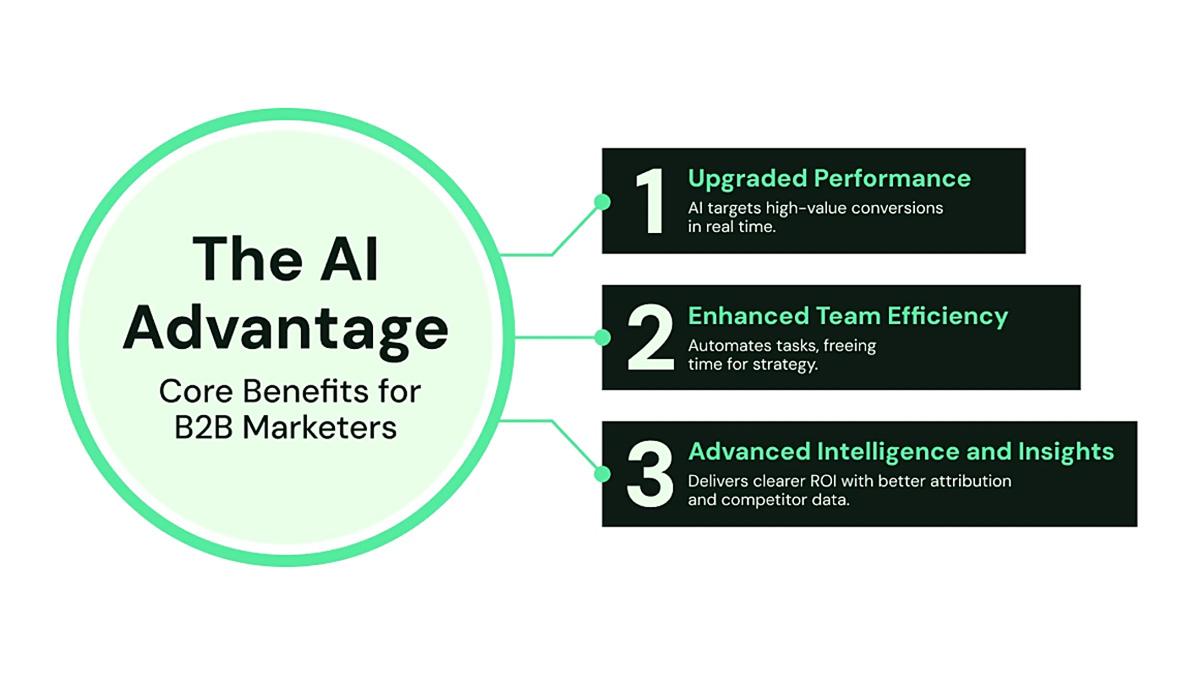
AI is reshaping not only the tools we use but also the very structure of marketing teams in B2B companies. As B2B marketing trends continue to evolve, it is essential for businesses to adopt AI-driven strategies that enhance efficiency, foster creativity, and drive personalised engagement.
The rise of AI in search is fundamentally changing how potential customers seek, discover, and act on information. For B2B marketers, the path forward is clear: adapt quickly, create high-intent content, and position your brand as a trusted source of expertise across owned and third-party channels.
Those who cling to traditional SEO risk fading into obscurity, while those who embrace AI-informed strategies will reach buyers earlier, influence decisions more effectively, and maintain visibility. The future of B2B marketing belongs to organizations that don’t just respond to AI but instead actively shape how AI communicates with and about their brand.
To stay competitive, it is crucial to think strategically and integrate AI into your B2B marketing strategies now. Embrace the future of marketing automation trends and start building future-ready teams today.

 By
By 













Comments