
 By
By Think about the last time you wanted to find a good restaurant in a suburb you don’t know that well.
Or you were looking for a skincare product that actually works. Or you wanted to figure out which tradie to hire for a renovation. The traditional internet search engine is losing its monopoly as a massive behavioural shift redirects user queries straight into the search bars of Social Media Platforms.
Did you open Google?
Or did you open Instagram, TikTok, or YouTube?
For younger demographics and professionals alike, search is no longer just about text-based indexes. It is about visual proof, community validation, and real-time answers delivered by real people.
Why Audiences are Bypassing Google
The shift toward social search is driven by a desire for raw authenticity. Traditional search engine results pages have become cluttered with programmatic ad placements and heavily optimised, generic landing pages.
When users search for a product recommendation, a software tutorial, or industry insights, they prefer a 60-second video or a detailed text breakdown from a trusted peer. Social platforms deliver instant, humanised answers that traditional search engines struggle to replicate.
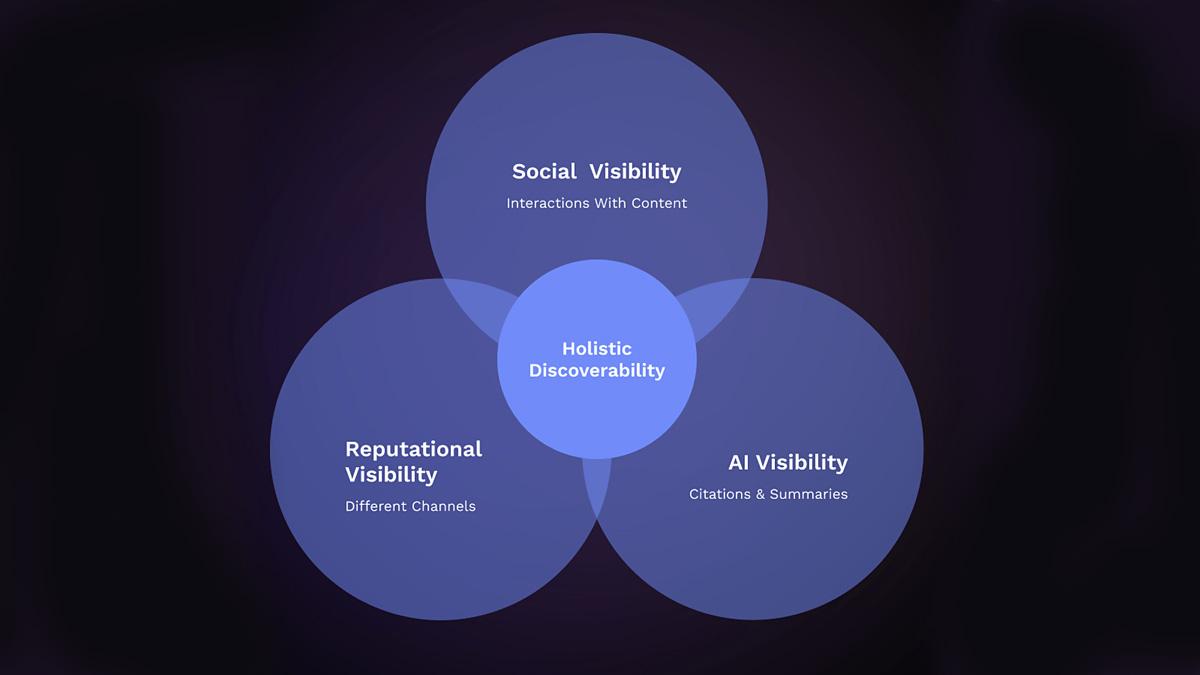
Decoupling SEO: From Websites to Algorithms
This evolution changes how platform algorithms treat your content. Social networks are actively optimising their internal directories to mimic advanced search engines, meaning your posts need to be built for discoverability long after the initial publication hour.
Video captions have effectively become search answers, and hashtags function exactly like traditional keywords. The algorithms read the text in your graphics, the spoken words in your video transcripts, and the context of your captions to match your content with highly specific user intents.
The B2B Landscape: Search on LinkedIn
Social search is not limited to consumer brands or lifestyle content. The professional landscape is experiencing the exact same transformation, with decision-makers using networks to source vendors, strategies, and case studies.
Recent industry data highlights that 86% of B2B marketers use LinkedIn as a marketing platform (CX Today, 2026), a metric driven by the fact that professionals use the platform to actively search for solutions. If your executive team is not publishing searchable insights, you are completely invisible to this high-intent traffic.
The Numbers That Make This Impossible to Ignore
This isn’t a theoretical trend, the data from multiple latest large scale studies over 2024 to 2026 is remarkably consistent, and it tells a clear story.
- 1 in 3 consumers now skip Google entirely and start their search journey on social platforms like TikTok, Instagram, or YouTube, rising to more than 1 in 2 for Gen Z (Sprout Social, 2025-26)
- Instagram leads Gen Z product discovery at 30.4%, followed by TikTok at 23.2%. Google now trails at 18.8% for this demographic (GRIN, 2025)
- 64% of Gen Z use TikTok as a primary search engine, with 51% preferring it over Google for information discovery (Adobe / Revel Interactive, 2025)
- Fashion-related searches on TikTok receive 503% more queries than the equivalent terms on Google (Rise at Seven, 2025)
- Brands that go social first see 10% higher annual revenue growth compared to those that don’t (Deloitte Digital)
- 76% of all consumers and rising to 90% of Gen Z say they’ve made a purchase in the last six months based on content they saw on social media
For businesses still allocating their entire digital marketing budget around Google visibility and traditional SEO, these numbers represent a gap that is quietly growing every month. And the last stat is the one worth sitting with, this isn’t just a discovery shift. It’s a conversion shift too.
Final Thoughts and Conclusion
Social media being a search engine isn’t a trend that’s coming. It’s already here, already influencing how your potential customers find businesses like yours, and already separating the brands that are discoverable from the ones that are active but invisible.
The good news is that the principles aren’t new. Keyword thinking, structured content, genuine usefulness, and clear answers to real questions. These are the foundations of good search optimisation, whether the search is happening on Google or on TikTok. The application is different, but the underlying logic is the same.
What does need to change is the intention behind how social content gets made. Content created purely to fill a posting schedule or hit an engagement metric is doing a different job to content created to be found by someone actively searching for what you offer. Both have value, but only one of them is a growth channel.
The businesses that figure that out right away will have a meaningful advantage over the ones that wait until it’s obvious.
For More and Moving Ahead…
Talk to PHMC GPE Team !
Discover More:
At a Glance… The Soul of PHMC GPE LLC
Positioned to Influence… Appointed to Succeed !
***

Marketing & Technology
Bound and Secured

“The Right Message to the Right Customer at the Right Time through the Right Channel”
The XXIst Century Technologies offer a vast and huge panel of useful tools that can ease a Marketing process if correctly and securely used.
- Define your Marketing Strategy and Plan
- Select and Use the right Technology tools
- Refine your Tactics to Reach your Goal
***













Comments