
 By
By Companies spend thousands of dollars and countless hours developing and implementing marketing strategies.
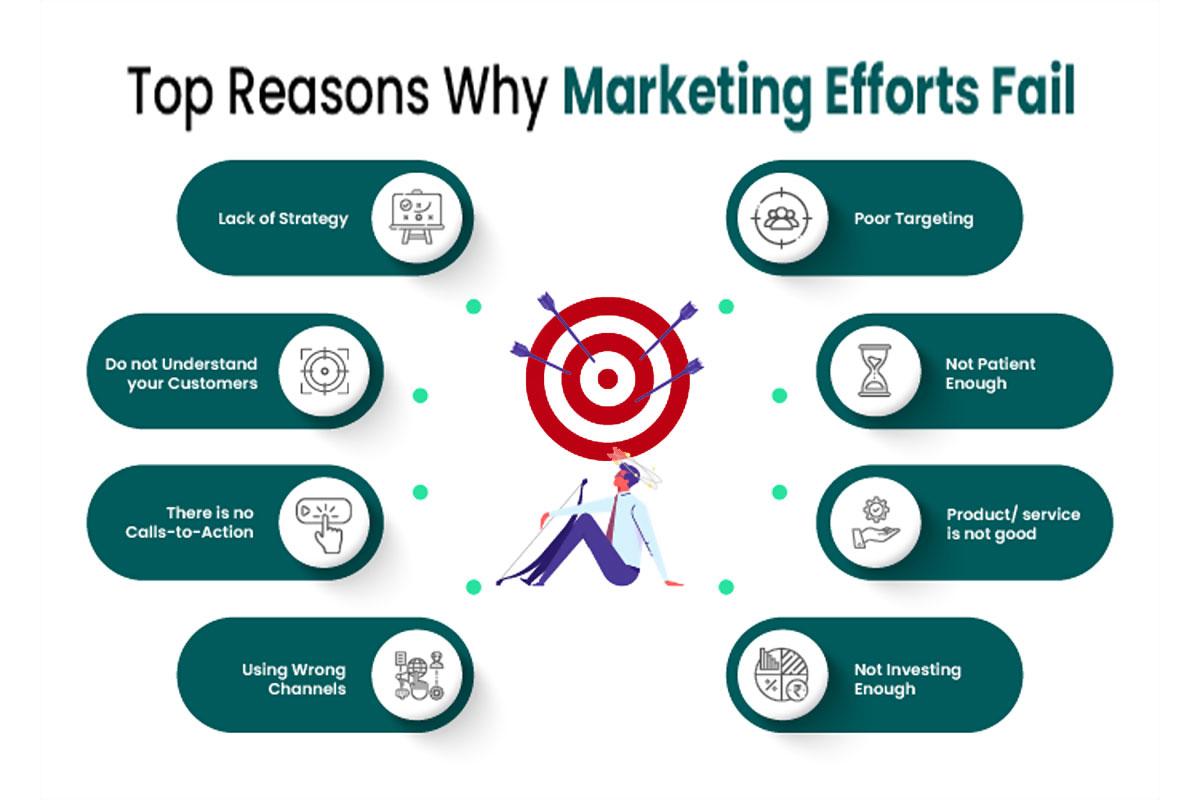
Yet despite all that effort, many marketing plans fail to produce the results executives expected. Most marketing plans fail because they lack clear goals, don’t align with business objectives, or aren’t executed properly.
Many businesses confuse tactics with strategy, skip foundational planning steps, or create plans that look good on paper but fall apart in the real world. In this article, we break down the top reasons why marketing plans fail and more importantly, how to build one that actually delivers results.
According to a study published in The Journal of Business Research, surveys show that marketing strategy implementation failure rates exceed 60% and reach as high as 90%. “Implementing marketing strategy is a time-consuming, problem-ridden process, with frequent failures,” the authors note.
Marketing planning matters – but only if done right
Creating a marketing plan is easy. Creating a marketing plan that works? That’s a different story. Despite their best intentions, many small businesses and startups dive into campaigns without a solid foundation then wonder why they’re not getting results. Effective marketing planning isn’t just about making lists of things to do. It’s about aligning your marketing with business goals, understanding your audience, and having a roadmap that’s realistic and measurable. When done well, it’s a growth engine. When rushed or ignored, it’s a money pit.
The real reasons why marketing plans fail
1. No clear, measurable goals
A plan without goals is just a to-do list. One of the most common reasons why marketing plans fail is because they’re built on vague objectives like “grow our brand” or “get more leads.” Instead, goals should follow the SMART framework: Specific, Measurable, Achievable, Relevant, and Time-bound.
For example: “Generate 100 qualified leads through SEO by Q2” is a clear, trackable goal. Without goals like this, it’s impossible to measure success or justify your marketing spend.
2. Strategy confusion: Tactics vs. strategy
Many businesses confuse what they’re doing (tactics) with why they’re doing it (strategy). Posting on Instagram, running Google Ads, or launching a newsletter are tactics, but without strategic alignment, they’re unlikely to move the needle. It’s essential to understand what are the strategies of digital marketing that align with your goals. That might include positioning, brand messaging, customer segmentation, or content frameworks. The plan should guide the tactics not the other way around.
3. Lack of alignment across the business
Even the best marketing plan can fall apart if it’s siloed away from the rest of the business. A lack of collaboration between teams, especially marketing, sales, and leadership, leads to disconnected messaging and wasted resources.
In fact, many marketing plans fail not because of the plan itself, but because of poor execution due to organisational silos. When departments don’t share data or align on goals, execution suffers.
4. No one owns the execution
A plan is only as good as its execution. If no one is clearly responsible for managing timelines, channels, and performance tracking, things will quickly fall apart. This is especially common in small teams, where marketing is often a shared or secondary responsibility. Without accountability, marketing planning becomes wishful thinking. Someone needs to own the process, whether that’s an in-house marketer or a trusted partner like PHMC GPE.
5. Failure to adapt
Markets shift. Algorithms change. Customer behaviour evolves. If your marketing plan is locked in and doesn’t allow for iteration, it can become irrelevant fast. A good marketing plan includes room for testing, feedback, and optimisation.
What does a good marketing plan look like?
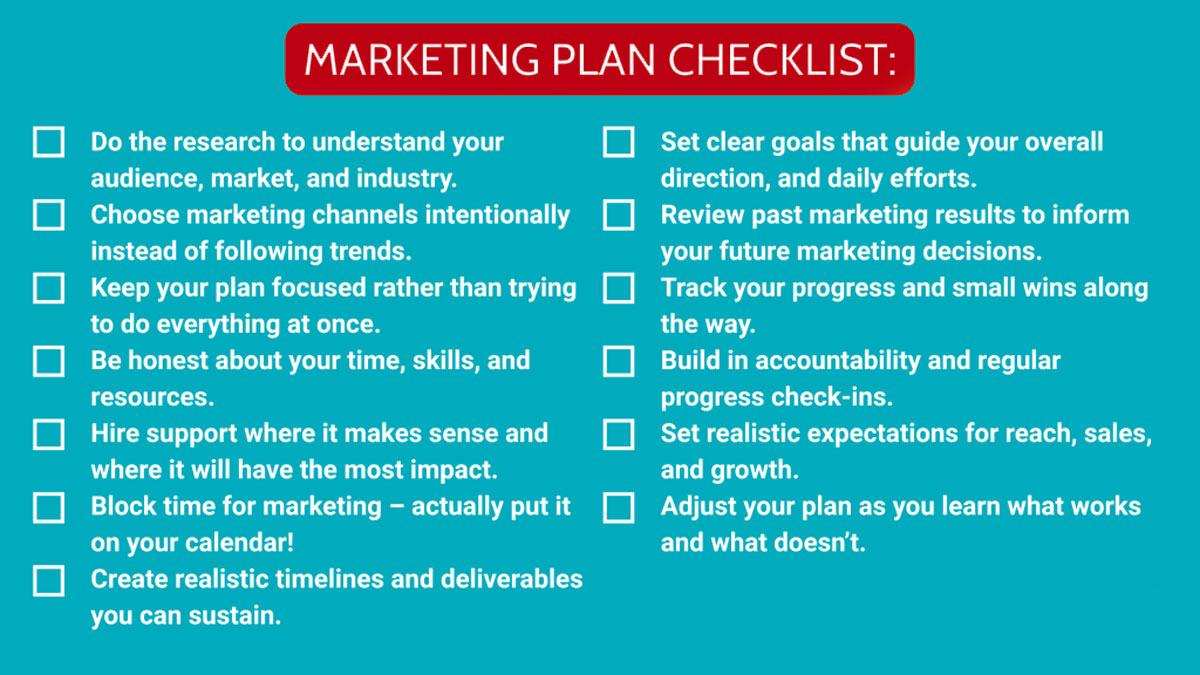
If you’re wondering how to do it right, a solid marketing plan example should include:
- Business and marketing goals (clear + measurable)
- Target audience breakdown
- Key messaging and positioning
- Chosen marketing strategies for small business channels (SEO, PPC, socials, etc.)
- Tactical plan with timelines
- Metrics and KPIs
- Budget allocation
Many businesses benefit from using marketing plan templates to get started, but templates alone aren’t enough. You need strategy behind them.
What small businesses get right
Not everything is doom and gloom. Small businesses that succeed with their marketing usually have:
- Clarity around who they are and who they serve
- Focus on a few high-impact channels (not trying to do everything)
- Consistency in branding and message
- A strong partner or internal lead who manages marketing efforts
If you’re a small business owner, focusing on just a few well-executed marketing strategies for small business can outperform a scattergun approach every time.
Marketing planning isn’t optional
If your current plan isn’t driving results, fix the structure, align your efforts, and commit to a strategy that actually supports your business goals. Most marketing plans fail because the execution environment was never built to support them. A well-developed marketing plan provides direction, but a plan alone does not produce results. Organizations need a practical roadmap that teams can execute consistently week after week.
Effective marketing plans help organizations increase marketplace awareness, strengthen brand positioning, engage customers, support sales efforts, generate qualified opportunities, and drive long-term growth. But those outcomes only occur when the plan is realistic, focused, and consistently implemented. Many organizations mistake complexity for effectiveness. In reality, the most successful marketing plans are often the simplest. They clearly define goals, strategies, tactics, budgets, schedules, responsibilities, and performance measures in a format teams can easily follow.
For More and Moving Ahead…
Talk to PHMC GPE Team !
Discover More:
At a Glance… The Soul of PHMC GPE LLC
Positioned to Influence… Appointed to Succeed !
***

Marketing & Technology
Bound and Secured

“The Right Message to the Right Customer at the Right Time through the Right Channel”
The XXIst Century Technologies offer a vast and huge panel of useful tools that can ease a Marketing process if correctly and securely used.
- Define your Marketing Strategy and Plan
- Select and Use the right Technology tools
- Refine your Tactics to Reach your Goal
***












Comments