
 By
By Real learners are messier than that.
They might:
- Get busy halfway through the course
- Forget where they left off
- Skip ahead because they think they already know something
- Avoid an assignment because it feels uncomfortable
- Miss a week and feel too far behind to return
- Leave a lesson open in a browser tab for six days, then come back wondering what on earth they were doing
- That doesn’t mean they’re lazy. It usually means they’re human.
A stronger course doesn’t assume every learner will follow the path perfectly. It helps imperfect learners find their way back. And that changes the question you ask as you build. Instead of asking, “What should the perfect student do next?“, ask: What happens when the learner is not at their best?
That question can change the whole shape of a course.
- It might mean making the first lesson shorter.
- It might mean adding a clear “Start Here” section, using lesson prerequisites to guide the path, or adding a quick checkpoint before students move on.
- It might mean using quizzes not just to grade students, but to help learners notice what they do and don’t understand.
- It might mean adding assignments so students have to apply the idea before passively consuming another lesson.
- It might mean using notifications or engagements to bring students back at the right moment.
- It might mean turning on Focus Mode so the lesson page gives students fewer things to click, ignore, or wander away from.
- Or it might simply mean opening the Course Builder and asking whether the structure still makes sense to someone learning this for the first time.
The goal is not to make the course easier in a shallow sense, but to make it more resilient. A resilient course still works when the learner misses a week. It still works when they feel unsure. It still works when they need a reminder, a smaller step, a clearer instruction, or a little more support before they can continue.
Pick one course on MTS and look for the place where a real learner is most likely to drift, stall, or quietly give up.
Then ask:
- What could I shorten?
- What could I clarify?
- What could I turn into a checkpoint?
- What could I support with a reminder?
- What could I move earlier?
- What could I remove?
That’s where the course probably needs your attention, not because your students are failing the course, but because the course may need to do a better job of helping imperfect students succeed.
⚡ QUICK TIP
Use the Course Syllabus as a Sales Tool
Your course syllabus is not just a list of lessons, it’s one of the places where a potential learner decides whether the course feels worth their time, money, and attention.
That means lesson titles matter.
A syllabus that reads like this…
- Module 1: Introduction
- Module 2: Setup
- Module 3: Content
- Module 4: Launch
…may be accurate, but it doesn’t tell the learner much about the journey they are about to take.
Instead, try making your lesson titles more outcome-focused:
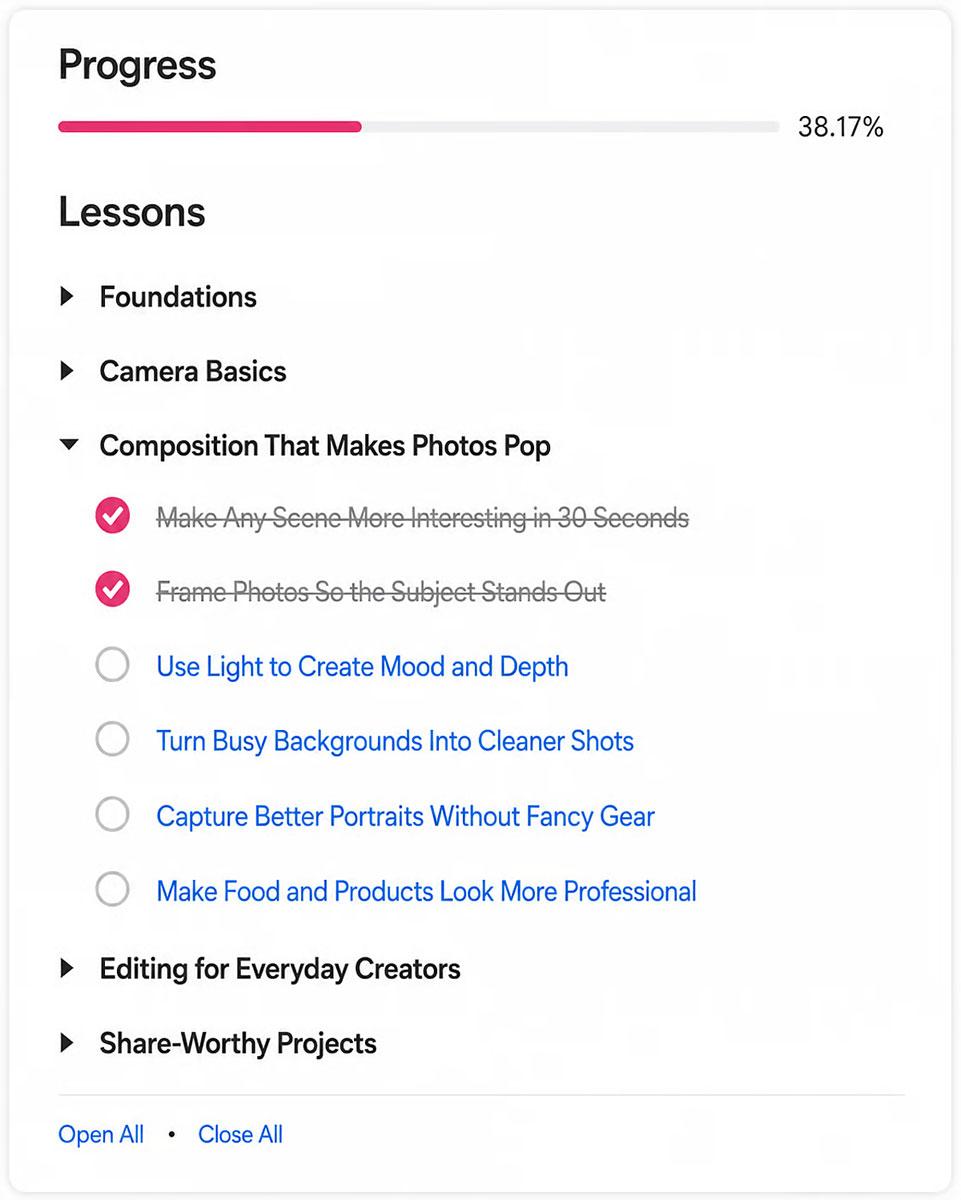
- Get Clear on Your Course Outcome
- Set Up Your Course for a Smooth Start
- Create Lessons Learners Can Finish
- Launch With Confidence
The goal isn’t to make every title sound dramatic. It’s to help learners understand the value of each step before they open the lesson.
For More and Moving Ahead…
Talk to PHMC GPE Team !
Discover More:
At a Glance… The Soul of PHMC GPE LLC
Positioned to Influence… Appointed to Succeed !
***

Marketing & Technology
Bound and Secured

“The Right Message to the Right Customer at the Right Time through the Right Channel”
The XXIst Century Technologies offer a vast and huge panel of useful tools that can ease a Marketing process if correctly and securely used.
- Define your Marketing Strategy and Plan
- Select and Use the right Technology tools
- Refine your Tactics to Reach your Goal
***













Comments