A media kit is a public relations tool that compiles everything a potential collaborator may need to know about working with your brand.
It’s an informational document, slideshow, or webpage that helps other businesses decide if they should work with you or not. Behind every major collaboration, sponsorship deal, podcast appearance, PR mention, or event invitation, there’s one underrated asset responsible for making the decision fast: a strategic media kit built to generate interest.
HubSpot defines a media kit as a comprehensive package of promotional assets designed for digital media, similar to a press kit aimed at traditional journalists. Yet most brands either lack one or have a version that resembles a resume instead of a persuasive partnership tool.
Opportunities rarely arrive with an invitation. Often, they come when someone checks your LinkedIn profile, reads a post that gained traction, and quietly wonders, “Are they ready?” A polished media kit answers that question right away.
Press Kit vs. Media Kit: What’s the Difference?
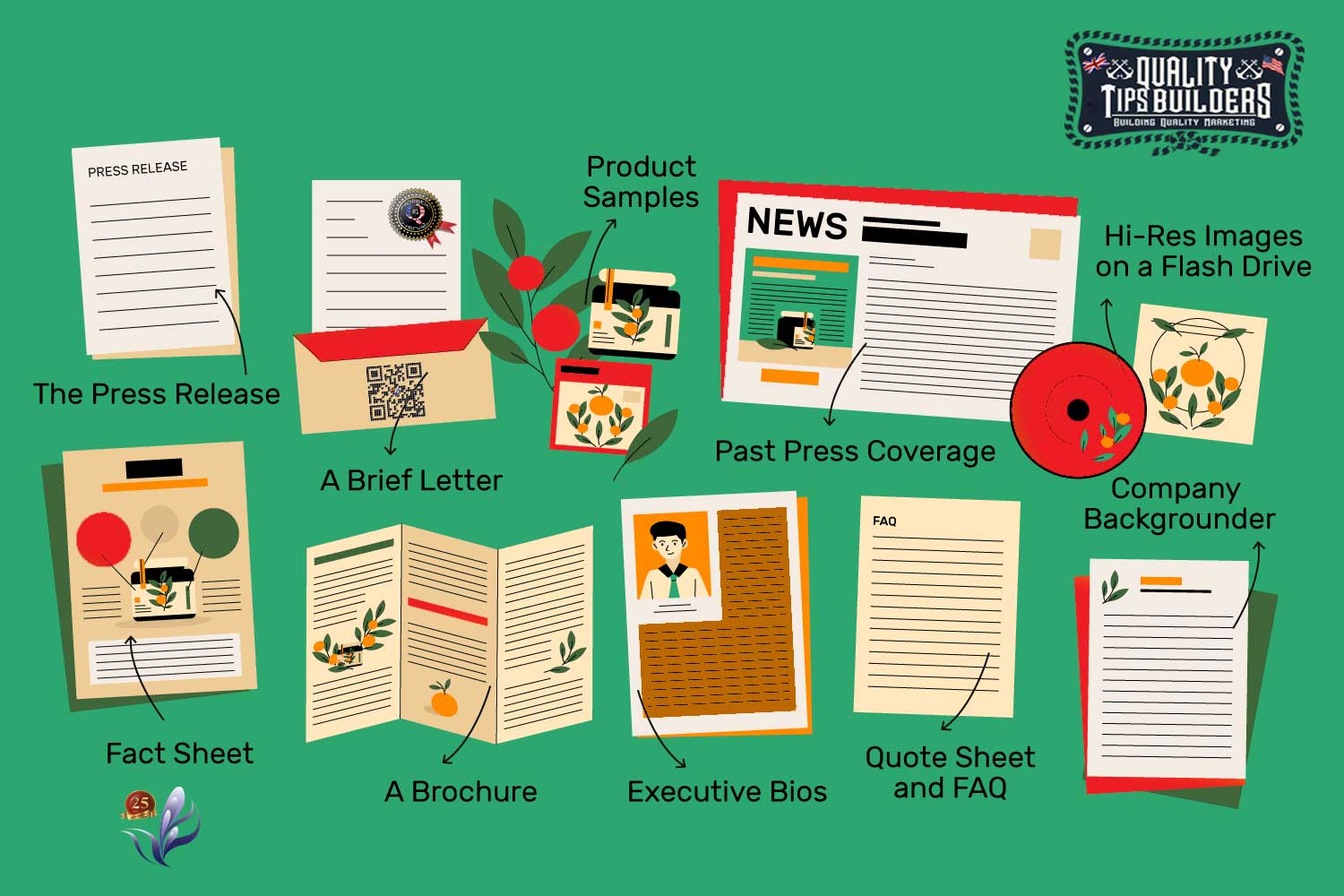
A press kit and a media kit serve complementary but distinct roles. A press kit supports earned media by giving journalists the facts they need to cover news. Elements include company background, leadership bios, data sheets, product specs, and recent press releases. A press kit helps reporters write accurate stories without requesting extra materials.
A media kit, on the other hand, is a partnership asset. It persuades potential collaborators by highlighting audience relevance, proof of impact, and the brand’s value to sponsors, event organizers, podcasters, or other partners. A media kit focuses less on company history and more on what the partner gains from working with the brand.
A press kit supports visibility through news coverage, while a media kit accelerates decisions about collaborations. Most brands need both.
A Step-by-Step Guide to Creating a Media Kit
Just like any marketing asset, a brand’s media kit needs a clear goal and should be designed to persuade decision-makers.
Step 1: Define the Purpose Before Designing Anything
Many marketing teams start designing a media kit before answering a foundational question: What do we want this media kit to achieve?
When the purpose is clear, the media kit becomes intentional and persuasive. The intent shapes the content, the metrics that matter, messaging tone, and design structure. For example, instead of a cybersecurity startup blindly creating a media kit filled with product features and awards, the team can establish a focused purpose such as booking the chief technology officer as a keynote speaker on AI-driven cybersecurity at tech events.
With that clarity, the team can include content that supports that objective. Speaking topics, audience fit, industry relevance, past speaking engagements, analyst mentions, and press quotes show why the speaker is a strong option. Don’t forget to include a direct call to action (CTA), such as “Request speaker availability” or “Watch Bob Smith’s speaker reel here.”
Media kits serve different purposes depending on the business model. For instance, SaaS companies focus on analyst features, podcast interviews, and partner recruitment. Influencers and creators emphasize sponsorships. Consultants and coaches concentrate on speaking history and press visibility. E-commerce brands highlight retail partnerships, product placements, and media features.
Step 2: Include the Core Elements That Make Decision-Making Easy
A compelling media kit includes these essential components:
Brand story. This should be a short and emotionally grounded positioning statement. It should not read like a corporate biography. Stories activate narrative transportation, make the brain feel connected, retain information longer, and build emotional alignment. A simple structure, such as “___ is a platform helping _____ achieve _____ through _____,” works well.
Audience profile. Decision-makers partner with brands that attract the right audience. They don’t care about the brand until they know who cares about the brand. This section should specify demographics (age, title, company size, location, industry, etc.), psychographics (values, motivations, and buying behavior), and audience intent (why they follow, read, or buy).
Metrics and key performance indicators. Strong metrics calm the unconscious fear of wasted time and money. The numbers do not have to be large to be effective. Growth percentage framing often creates meaningful context. Include engagement rate (not just follower count), email performance, website traffic rates and sources, conversion figures, or noteworthy milestones.
Proof of impact. Testimonials, case studies, and recognizable logos communicate real-world results. This is the section to show ROI instead of vague praise. Remember, humans trust choices others have already validated. Effective case studies follow a simple formula: client → challenge → solution → result → tangible value.
Offer menu and pricing. This section is option but can eliminate ambiguity and increase conversions. Tiered packages (basic, standard, premium) can influence selection through the decoy effect, which encourages buyers to stop asking, “Should I buy?” and instead ask, “Which option makes the most sense?”
Clear process and next steps. Give decision-makers an obvious path to take the next step. Effective prompts include, “book a call,” “request custom pricing,” or “download full sponsorship catalog,” or “Email sponsorships@brand.com.”
Step 3: Design It So It Communicates Value
Content sells the value, while design signals the price. Strong design uses high-contrast hierarchy with bold headlines, standout metrics, generous white space for easy reading, consistent typography, brand-aligned visuals, and short scannable sections.
Step 4: Avoid Common Media Kit Mistakes
Media kits fail because they create friction. Cluttered design, content that reads like a resume, outdated data, and failure to include a unique angle and clear call to action triggers decision fatigue and abandonment. A media kit’s job is not to be impressive. Its job is to make saying yes easy.
Step 5: Treat It as a Living Document
Partnership opportunities evolve, and the media kit should change with them. Update it quarterly or when goals and target audiences shift. Refresh it after growth milestones, or with new offerings, testimonials, or PR mentions.
Make the Brand Ready Before Opportunity Knocks
Whatever a company decides to include in its own Media kit is going to be very specific to its niche or industry. However, there are a handful of items every Media kit needs to have, including the most important information about the business, and biographies that showcase the staff and their accomplishments. They also need to have testimonials and quotes from other people who have used the company’s products or services, high-resolution images and logos, contact information, a fact sheet about the products or services, as well as links to all of the company’s social media accounts.
A strong media kit isn’t just a marketing asset. It’s a silent strategist that works behind the scenes to open doors. When built with intention, supported by proof, and designed for clarity, it removes friction, accelerates decision-making, and positions the brand as ready for opportunity. Ultimately, it helps the right people say yes faster. Now that you know how to make a media kit, it’s time to earn media coverage—just because you build it does not mean they’ll come. You’ll need to use some genuine Social Media, and content marketing to get your brand in front of the right media outlets, reporters, and bloggers.
In Brief…
What is the difference between a media kit and a press kit?
A media kit is used to pitch your brand for collaborations, while a press kit is used to get press coverage.
How often should I update my media kit?
You should update your media kit at least every six months or whenever there are significant changes in your metrics, services, or branding.
Who needs a media kit?
A media kit is essential for bloggers, influencers, small businesses, startups, artists, nonprofits, authors, podcasters, marketing agencies, and event planners to professionally present their brand, showcase achievements, and attract potential partners and opportunities.
Are media kits still used?
Yes, media kits are still widely used by professionals and businesses to present their brand, showcase their achievements, and attract potential partners and opportunities in a professional and organized manner.

 By
By 











Comments