
 By
By In today’s fiercely competitive market, where countless businesses vie for recognition, the significance of a strong brand cannot be overstated.
A compelling brand serves as a vital tool for businesses to distinguish themselves amidst competitors and drive business growth.Understanding branding and its creation process is crucial when developing a brand identity.
Let’s delve into the steps required to build an exemplary brand identity, look at the best market leading examples, strategies, and tools to show you how to create a brand for your business with a strategic growth mindset.
Key Takeaways for creating a brand identity for business growth:
- Brand identity sets your business apart from competitors, builds trust with customers, and helps to increase sales.
- To position your brand successfully, analyse competitors to find ways to stand out to your target audience.
- Know your ideal customer and their problems. Create a unique value proposition to answer these problems.
- Brand values are the guiding principles that shape your brand’s behaviour and decisions.
- Invest in brand-building activities such as marketing campaigns, community engagement, and strategic partnerships to strengthen brand awareness and loyalty.
What is a Brand?
A brand is the unique identity and perception of a business or organisation in the minds of consumers. It shows what your business is about, its values, and what sets it apart from competitors in the market. Brand encompasses everything from the visual elements like logos and colours to intangible aspects like values, culture, personality, and reputation.
Creating a successful brand strategy involves managing all customer interactions to build a positive and trustworthy experience. Strong brands recognise that brand identity needs to be present in every touch point from the tone of voice on a website and social media captions to customer service and reputation.
Brand strategy is one of those business concepts that sounds like theory until a competitor with an identical product charges twice the price and wins, and suddenly the gap between the two companies is obvious. This is why a clearly defined brand strategy is the foundation of sustainable business growth, and what separates companies that scale from ones that plateau.
The most persistent misconception in business branding is that a brand is a visual identity. Fix the logo, update the color palette, redesign the website and the brand problem is solved. It isn’t.
A brand is the sum of what people believe about a business before, during and after every interaction with it. The logo is one signal that contributes to that belief. The product quality is another. The customer service experience is another. The pricing sends a signal. The tone of every piece of communication sends a signal.

Brand strategy is the discipline of making sure all those signals are pointing in the same direction… consistently, over time. This is why working with a dedicated brand agency produces different results than running a rebrand as an internal project. Their approach treats brand identity as a strategic foundation rather than a design exercise. Building the positioning, naming and visual language from a defined business objective outward. The result is a system where every element supports the same perception rather than a collection of decent-looking assets that don’t quite tell a coherent story.
Why Consistency Compounds Over Time
The clearest real-world demonstration of brand strategy working at scale is Apple. Not because of any single product launch or campaign, but because every decision the company makes (product design, retail experience, packaging, pricing, advertising tone) reinforces the same core perception: premium, simple, human. That consistency has been maintained for decades across leadership changes, product category expansions and market shifts.
The compounding effect is the key mechanism. Each consistent brand touchpoint doesn’t just maintain existing perception, it deepens it. A customer who has a good product experience, sees advertising that feels coherent with that experience and receives packaging that confirms the same story is building a level of brand trust that is genuinely difficult for a competitor to dislodge.
Conversely, inconsistency erodes trust faster than most businesses realize. The long-term financial value of brand consistency has been documented repeatedly in marketing research. Companies with consistent brand presentation across all channels generate significantly higher revenue than those operating without a unified system.
Positioning Is the Strategic Decision Everything Else Follows
Brand positioning (the defined space a business occupies in the customer’s mind relative to alternatives) is the upstream decision that determines whether every downstream branding effort makes sense or wastes money.
Patagonia is the cleanest example of positioning executed with discipline. The brand occupies “outdoor gear for people who care about the environment” with such conviction that it has made business decisions that would terrify most companies, telling customers not to buy new products, donating revenue to environmental causes, publicly criticizing its own industry. Every one of those decisions reinforces the positioning rather than contradicting it. The result is a customer base with loyalty levels that most brands can’t dream of manufacturing with conventional marketing spend.
The positioning decision answers a specific question: why should someone choose this business over every available alternative? A business that can’t answer that question clearly doesn’t have a brand strategy. No, it has a logo and a product, which is a much more fragile competitive position.
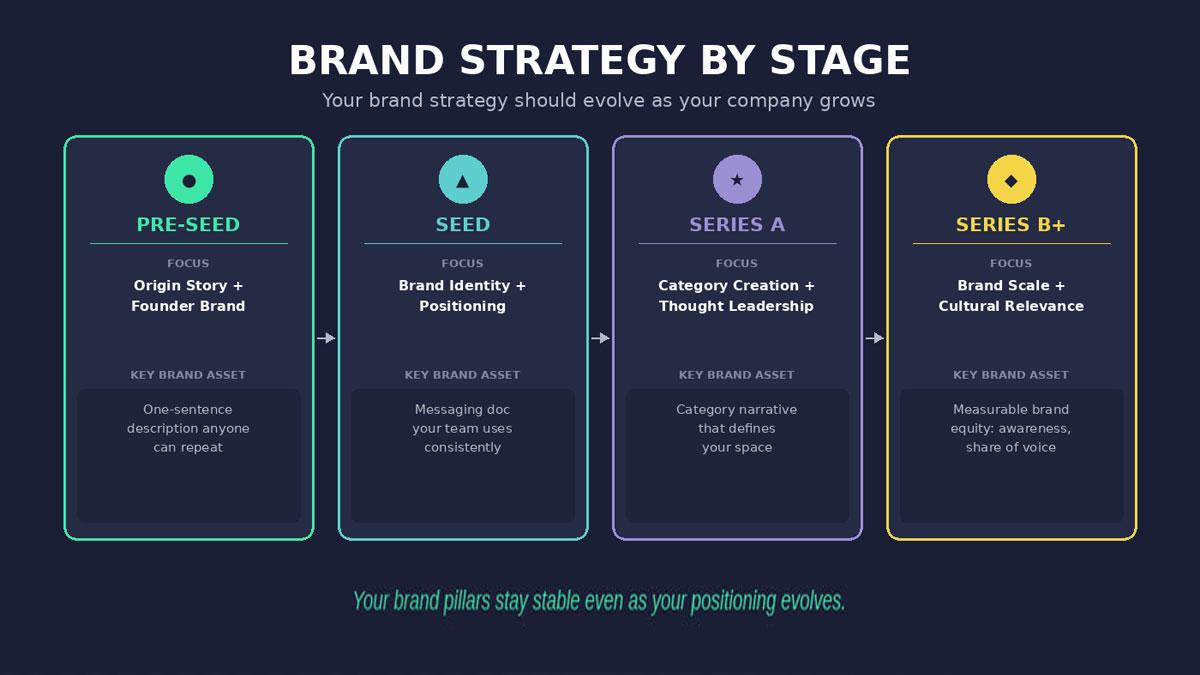
Brand Strategy as a Growth Infrastructure
The operational case for brand strategy investment is straightforward. A business with a clearly defined brand position, consistent visual and verbal identity and a reputation that precedes it in sales conversations has a structural advantage in three areas that directly drive growth.
Nike has operated on this model for decades. The product is athletic footwear and apparel, a category with hundreds of competitors and minimal technical differentiation at most price points. The brand is aspiration, performance identity and cultural relevance built in large part through leveraging secondary brand associations, from Michael Jordan to streetwear culture to the broader “just do it” ethos that attached itself to movements well beyond sport. That accumulated brand equity is why Nike commands a price premium, retains customers across product lines and enters new categories with a built-in audience. The product alone doesn’t explain the business. The strategy does.
The Cost of Not Having One
The businesses that treat brand strategy as optional (something to think about after the product is proven and the revenue is stable) tend to discover the cost of that deferral when they try to scale. Scaling a business with an unclear brand position means spending more on marketing to generate the same results, competing on price because there’s no differentiated value story and rebuilding customer trust from scratch in every new market.
Brand strategy isn’t a luxury that large companies invest in because they can afford to. No, it’s the infrastructure that makes growth efficient, and the earlier a business builds it properly, the more every subsequent investment in marketing, sales and product development compounds on top of something solid.
For More and Moving Ahead…
Talk to PHMC GPE Team !
Discover More:
At a Glance… The Soul of PHMC GPE LLC
Positioned to Influence… Appointed to Succeed !
***

Marketing & Technology
Bound and Secured

“The Right Message to the Right Customer at the Right Time through the Right Channel”
The XXIst Century Technologies offer a vast and huge panel of useful tools that can ease a Marketing process if correctly and securely used.
- Define your Marketing Strategy and Plan
- Select and Use the right Technology tools
- Refine your Tactics to Reach your Goal
***

***












Comments