
 By
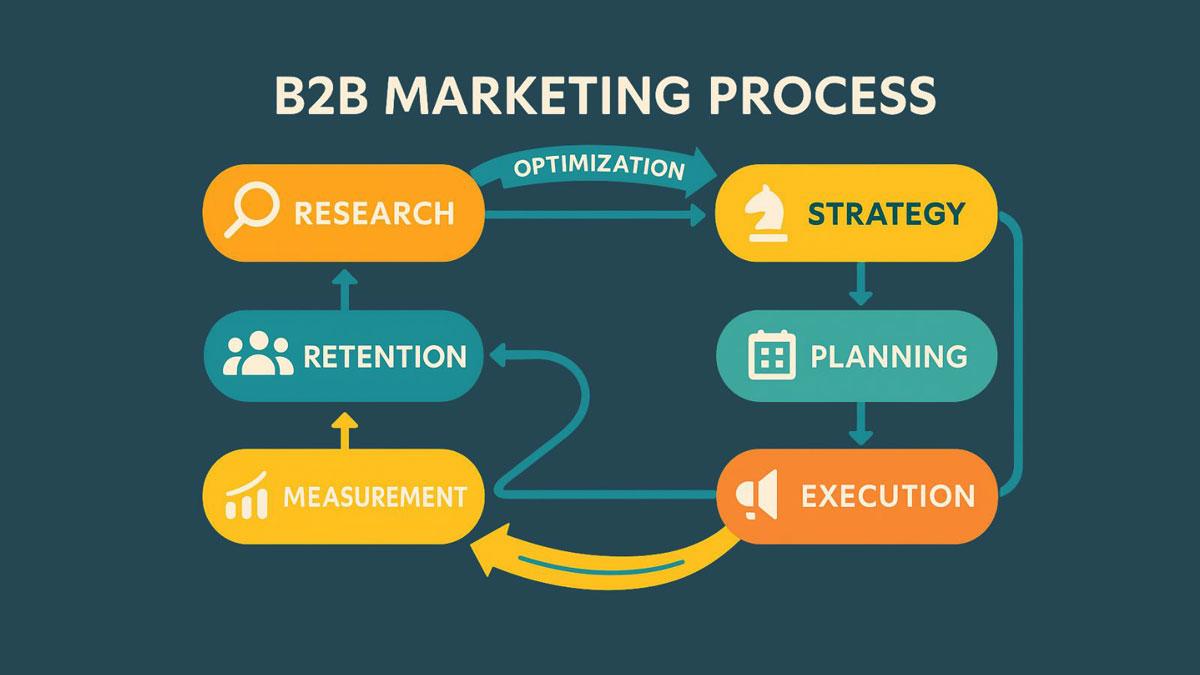
By B2B marketing strategies help businesses to connect with the audiences that matter, deliver compelling experiences, drive revenue and more.
The B2B marketing strategy outlines key target customers and/or buyer personas, the brand’s biggest competitors, and the company’s current marketplace positioning. It should also cover the brand’s value proposition, voice, and key messaging – all of which can be revised based on macro-level needs and market shifts.
Does my business need a B2B marketing strategy?
A B2B business needs a dedicated marketing strategy to effectively engage with other businesses. The marketing strategy is essential for targeting the right audience, building brand awareness and credibility, generating quality leads, nurturing relationships, and supporting sales.
Your B2B marketing strategy helps attract and engage potential customers, nurture long-term relationships, and drive revenue growth. By aligning marketing efforts with the unique dynamics of B2B buying, your business can successfully navigate longer sales cycles and complex decision-making processes.
Regular measurement and optimisation of the strategy are necessary to ensure that marketing initiatives are continuously refined to achieve better results and a higher return on investment.
How does a B2B marketing strategy support the sales process?
B2B marketing aligns with the sales process by generating qualified leads, providing valuable content and insights to prospects, nurturing relationships, and supporting sales teams.
Marketing efforts help identify potential customers, educate them about products or services, address objections, and facilitate decision-making, ultimately increasing the conversion rates of the leads passed through to sales for closing.
How do I nurture customers with a B2B marketing strategy?
When it comes to lead nurturing, the key is to put your ideal customer at the centre of your efforts. This fosters engagement, builds trust, and ultimately transforms more leads into loyal customers. Brands can establish themselves as trusted advisors by creating customer-focused content that is both valuable and educational.
The following are the main ways to gain customer insight to inform your lead nurturing strategy:
- Develop Buyer Personas: Create detailed buyer personas that represent your target audience. Dive into market research, conduct surveys, and hold interviews to identify the demographics, job roles, challenges, goals, motivations, and preferences of your audience. This valuable information enables you to customise your nurturing efforts to address their specific needs.
- Embrace Social Listening: Keep a close eye on social media platforms, industry forums, and online communities to actively listen to conversations relevant to your industry. Pay attention to the pain points and challenges your target audience discusses. Armed with this knowledge, you can craft nurturing content and messaging that directly addresses their needs.
- Gather Feedback Through Customer Surveys: Regularly reach out to your existing customers through surveys to gather their feedback. Learn about their pain points, challenges, and the solutions they are seeking. This valuable feedback allows you to refine your nurturing strategies and directly address the specific pain points your prospects are likely to encounter.
How do B2B marketing strategies evolve to meet industry-specific needs?
B2B marketing strategies consider the unique characteristics and requirements of specific industries. This involves researching industry trends, understanding buyer personas, addressing industry pain points, and developing industry-specific content and solutions. Tailoring messaging and strategies to meet the specific needs of different industries helps businesses connect with their target audience more effectively.
Marketing strategies can be adapted to specifically cater to the requirements of the relevant industry in the following ways:
- Customised Messaging: B2B marketing strategies tailor messaging and communications to address industry pain points, challenges, and specific needs. By highlighting how products or services can solve industry-specific problems, businesses can resonate with their target audience and demonstrate their expertise in that particular industry.
- Industry-Focused Content: B2B marketers create industry-focused content, such as case studies, whitepapers, and thought leadership pieces that showcase their understanding of the industry and provide valuable insights. This content helps establish credibility, build trust, and position the business as a knowledgeable partner within the industry.
- Industry Events and Associations: B2B marketers actively participate in industry-specific events, trade shows, conferences, and associations. These platforms provide opportunities to network with industry professionals, showcase products or services, and stay updated on the latest trends and innovations. Industry-specific events and associations offer targeted exposure and networking possibilities.
- Targeted Advertising and Account-Based Marketing: B2B marketers utilise targeted advertising and account-based marketing (ABM) strategies to reach specific companies within the target industry. These approaches allow businesses to deliver personalised messages and offers to their ideal customers, which increases the chances of engagement and conversion.
What are the key differences between a B2C and B2B marketing strategy?
B2C (Business-to-Consumer) and B2B (Business-to-Business) marketing strategies are significantly different due to the unique characteristics and dynamics of each market. The following are some of the key differences:
- Target Audience: B2C strategies focus on reaching individual consumers who make purchasing decisions for personal use. B2B strategies, on the other hand, target businesses and professionals who make purchase decisions on behalf of their organisations.
- Decision-Makers: B2C purchases are typically made by individuals or households, whereas B2B purchases involve a more complex decision-making unit with multiple stakeholders, departments, and hierarchical levels.
- Emotional vs. Rational Appeal: B2C marketing often appeals to emotions and desires, emphasising benefits and experiences that resonate with consumers’ personal aspirations. B2B marketing emphasises rationality, focuses on communicating the business’ value proposition, and articulates the tangible benefits of a product or service to address the needs of the business.
- Transaction Frequency: B2C transactions generally involve more frequent, lower-value purchases, while B2B transactions tend to be less frequent but with higher value. B2B relationships often involve long-term contracts and ongoing partnerships.
- Marketing Channels: B2C marketing typically utilises a wide range of mass media channels, including television, radio, digital advertising, and social media, to reach a large consumer base. B2B marketing will also often incorporate some of these channels as well as more targeted business channels, such as industry publications, trade shows, professional networking, and account-based marketing.
- Complexity and Technicality: B2B products and services are often more complex, requiring detailed explanations and technical specifications. B2C products, in contrast, are usually simpler and require less explanation.
- Content and Messaging: B2C content tends to be more creative and visually appealing and aims to capture attention and generate immediate purchase intent. B2B content focuses on industry expertise and thought leadership and provides in-depth information that addresses the specific challenges and needs of businesses.
- Purchase Process: B2C purchases are typically impulsive or based on immediate needs, with shorter decision cycles. B2B purchases involve more deliberation and more extensive research and evaluations, often requiring multiple touchpoints and interactions throughout the buying process.
By understanding these key differences, businesses can tailor their marketing strategies to effectively engage their target audiences, address their specific needs, and drive successful outcomes in the B2B environment.
How do I incorporate multiple channels into a B2B marketing strategy?
It takes around 5 to 20 touchpoints for a B2B lead to convert into a customer. As such, it is essential to design a B2B marketing strategy that engages your prospects across multiple channels, ensuring maximum reach and consistent communication.
By leveraging various channels such as email marketing, social media, content marketing, and personalised outreach, you can stay top-of-mind and foster strong relationships with your leads. The key is to provide value and establish credibility through regular touchpoints, keeping your brand visible throughout their decision-making process. A unified brand image and messaging should be presented across all touchpoints. This creates a seamless and memorable experience that builds trust, reinforces brand recognition, streamlines the customer journey and amplifies impact and engagement.
The following are some of the channels that may be incorporated into your B2B marketing strategy:
- Events and Webinars: Host virtual or in-person events and webinars to engage with your leads. These platforms allow you to showcase your expertise, answer questions, and build relationships. Capture lead information during registrations and follow up with personalised emails post-event.
- Retargeting Ads: Implement retargeting campaigns using platforms like Google Ads or social media advertising. Retargeting enables you to display targeted ads to prospects who have previously visited your website or interacted with your content. By reminding them of your brand and presenting relevant offers, you can nurture leads and increase the chances of conversion.
- Sales Outreach: Empower your sales team to actively pursue leads through personalised outreach. Whether it’s phone calls, LinkedIn messages, or tailored emails, direct communication from your sales representatives establishes rapport, addresses specific pain points, and guides prospects towards conversion.
Remember, the specific channels used will depend on your target audience, industry, and business goals.
How are data analytics used in developing a B2B marketing strategy?
Data analytics give businesses and marketers a deeper understanding of their customer’s unique needs, enabling them to effectively meet them. These invaluable insights can be strategically applied to target customers with precision and gain a competitive edge through delivering highly relevant B2B marketing communications.
How do I incorporate personalised content in my B2B marketing strategy?
Today’s customers expect personalised experiences that cater to their unique needs and preferences. Particularly in B2B marketing, it is crucial to deliver personalised and relevant content at every stage of the customer journey. Personalisation builds stronger and more enduring relationships between your business and your target audience.
The following are some of the key personalisation strategies that can be implemented in your B2B marketing strategy:
- Dynamic Email Campaigns: Divide your email list into segments based on demographics, behaviour, and engagement data. Craft personalised emails that resonate with each segment, providing valuable insights and solutions that are tailored to the specific challenges of the segment.
- Account-Based Marketing (ABM): Focus your efforts on high-value target accounts and develop customised content and experiences for each account. ABM allows you to tailor your messaging to the unique needs and pain points of individual organisations, significantly increasing conversion opportunities.
- Website Personalisation: Use data analytics and tracking tools to personalise the website experience for each visitor. Display relevant content, offers, and recommendations based on their previous interactions, guiding them more effectively through the sales funnel.
For More and Moving Ahead…
Talk to PHMC GPE Team !
Discover More:
At a Glance… The Soul of PHMC GPE LLC
Positioned to Influence… Appointed to Succeed !
***

Marketing & Technology
Bound and Secured

“The Right Message to the Right Customer at the Right Time through the Right Channel”
The XXIst Century Technologies offer a vast and huge panel of useful tools that can ease a Marketing process if correctly and securely used.
- Define your Marketing Strategy and Plan
- Select and Use the right Technology tools
- Refine your Tactics to Reach your Goal
***













Comments